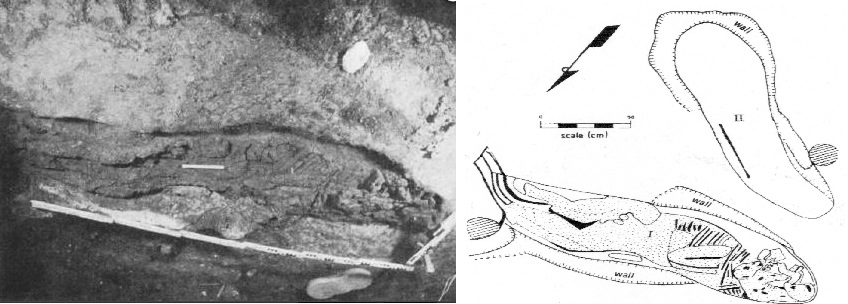
En la cueva de Morín (Cantabria, España) se hallaron en 1969 unos restos humanos antiguos datados en unos 30.000 años, que constituyen un caso único y formidable de conservación. Correspondían a cuatro cuerpos, pero no eran el típico conjunto de huesos fosilizados, sino moldes formados con terreno arcilloso. Y estos moldes reflejaban, además de los huesos, también los tejidos musculares.
Meet Bodo and Herto
Who are Bodo and Herto? Or first of all -should we say- where are Bodo and Herto?
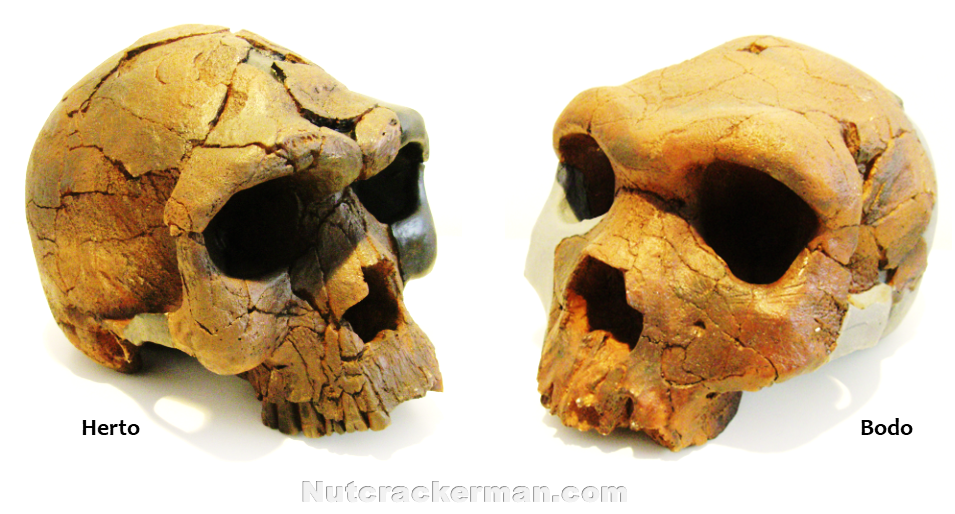
Bodo is a hominin fossil named after its site of discovery (in 1976): Bodo d’Ar in the Middle Awash Valley of Ethiopia. Herto is one of the earliest-know anatomically modern humans (AMH), named after the Herto Bouri Formation where it was found (in 1997) also in the middle Awash Valley.
Bodo and Herto are key fossils to understand the emergence of our species Homo sapiens. Probably the ancient populations of Bodo (archaic Homo sapiens) could have been distant relatives of the Herto modern humans populations in the same area.
A summary of AAPA annual meeting 2015 (in 101 tweets!)
The American Association of Physical Anthropologists (AAPA) had its 84th annual meeting last week in St. Louis, Missouri. The AAPA is the world’s leading professional organization for physical anthropologists. Its annual meetings draw 1,000+ scientists and students.
I followed most of the event on twitter and really enjoyed this experience, thanks to 20+ attendees who were tweeting live the key moments of the meetings. Therefore I decided to add another small contribution by sorting and posting the 101 tweets I collected during the event.
Thank you very much @HermanPontzer @johnhawks @HumanOrigins @APV2600 @Fidydvm @thewildniche @GPOrangutans @Paleophile @AAAGenetics @Anthro_Austin @mitoPR @LittleMsFossil @AlesiaAlesiaki @lancegravlee @darcy_shapiro @osteo_jo @DrKillgrove @rgairnelson @lancegravlee @ZThrockmorton @LoVUMass — Sorry if I’m missing someone – and happy to receive any correction or further contribution!
The post structure is: [ Session | Presenter: Summary ]
Galería de los Homínidos, Museo de la Evolución Humana
La Galería de los Homínidos es una magnífica exposición de las principales especies que han ido conformando nuestra evolución desde hace 7 millones de años. Su calidad le hace ser uno de los tesoros del Museo de la Evolución Humana de Burgos en España.
Contiene 15 réplicas de los principales cráneos fósiles de homininos, y 10 recreaciones de cuerpo entero de nuestras especies antepasadas más representativas, elaboradas por la paleoartista francesa Elisabeth Daynès, de gran reputación por la calidad de sus réplicas. Además, por supuesto, cuenta con numerosos paneles y pantallas explicativos dispersos por toda la sala.
Y destaco las charlas informativas que imparten periódicamente personas que, a la vez, son colaboradores del proyecto Atapuerca y, por tanto, tienen y demuestran amplio conocimiento teórico y práctico (y además, puedo decir que son magníficos comunicadores).
Las siguientes diapositivas muestran la Galería:
Hidden treasures at the Ditsong National Museum of Natural History
The Ditsong National Museum of Natural History, located in South Africa, contains some of the most important hominid fossils to understand Human Evolution in the range of 1.5-2.8 million years.
They are housed in the Broom room, named after Dr Robert Broom, which has public access to any visitor of the museum!
The following slides have great pics of the Broom room’s original fossils (source: Ted C. MacRae 2011)