
Actualizado febrero 2026 [English version below]
Se ha publicado el hallazgo y la interpretación del material arqueológico del nivel 3 de la Cueva Des-Cubierta (Madrid), acumulado en un depósito de dos metros de profundidad hace entre 43 y 70 ka (miles de años), cuando los neandertales eran la única especie humana que habitaba la zona. En este conjunto destaca una asombrosa acumulación de 35 cráneos de megafauna (bisonte, uro, ciervo, rinoceronte). ¿Qué ocurrió para que semejante conjunto terminara allí?
Comencemos por resaltar la singularidad del lugar. A 1100 m en el centro de la península ibérica, se trata de una ocupación humana inusual, la de unos «neandertales de montaña» que aprovechaban la riqueza de recursos que les ofrecía el valle, y la localización de las cuevas y abrigos, privilegiada para el control de la zona, de sus bosques frondosos y zonas despejadas o calveros. En realidad, hay al menos cuatro sitios con presencia neandertal, uno de ellos de hace 90 ka. Compartían o alternaban el uso del espacio con otros depredadores y carroñeros, y competían por alimentarse de los grandes herbívoros que habitaban el valle, siguiendo a los grandes rebaños, remontando el cauce del actual río Lozoya. Eran muy selectivos en los animales que consumían, y dejaron restos de los útiles musterienses que fabricaban para procesarlos, principalmente a partir del cuarzo de la zona, aunque también se desplazaban a zonas próximas buscando sílex.
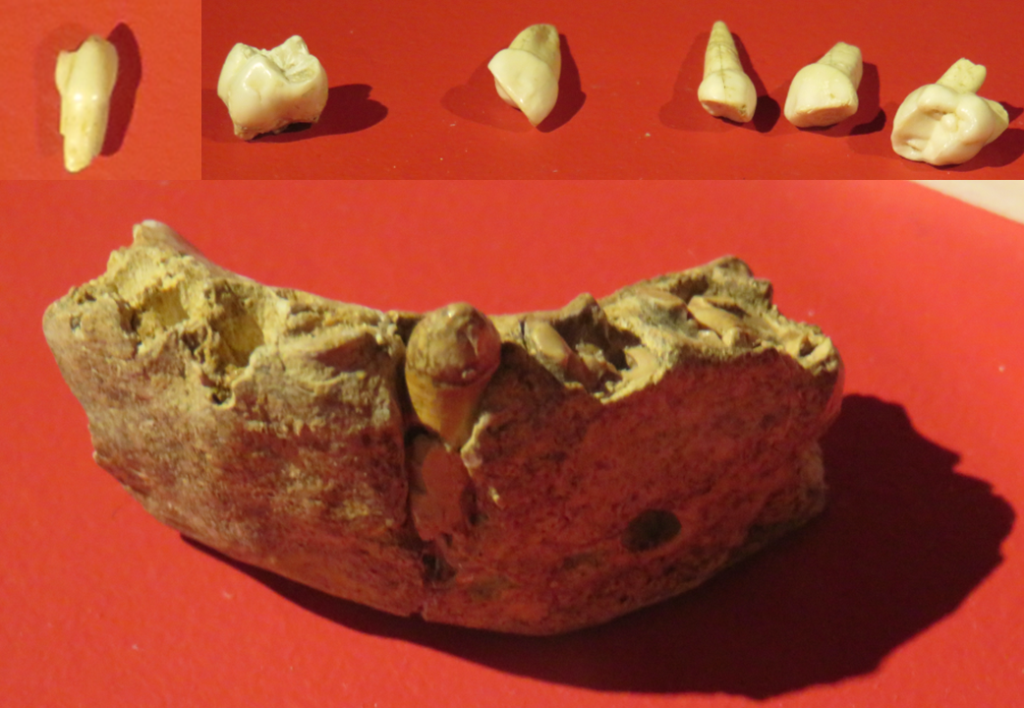
La Cueva Des-Cubierta se descubrió en 2009. Hasta ahora, el hallazgo más destacado había sido una mandíbula con seis dientes de un neandertal infantil de unos 3-5 años de edad en el nivel 2, apodado la «Niña de Lozoya» (aunque no se tiene certeza del sexo del individuo). Del nivel 2 también proceden 734 restos líticos musterienses. La elevada cantidad de cuernas, cráneos y pequeñas hogueras próximas a los restos humanos había sugerido algún tipo de ritual o un enterramiento, aunque el contexto no lo había podido confirmar. En los últimos años, la continuación de la excavación y del estudio del lugar y de sus dataciones ha permitido afinar más lo que pudo ocurrir allí.
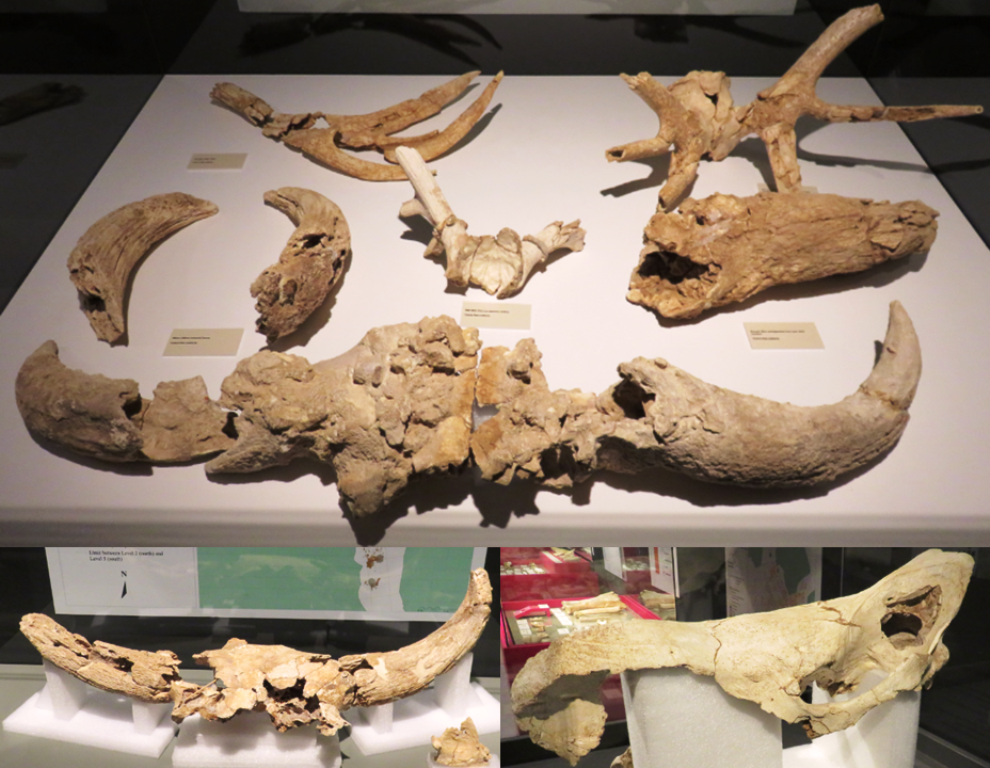
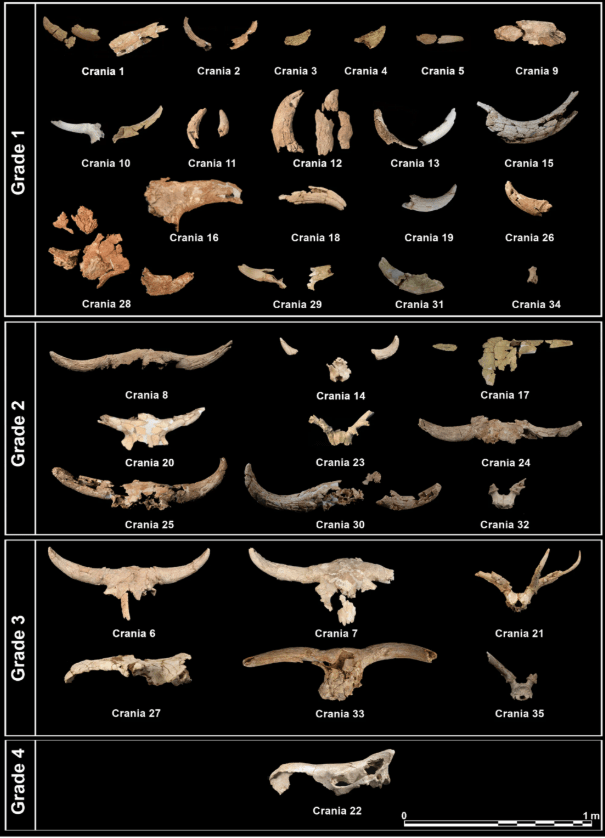
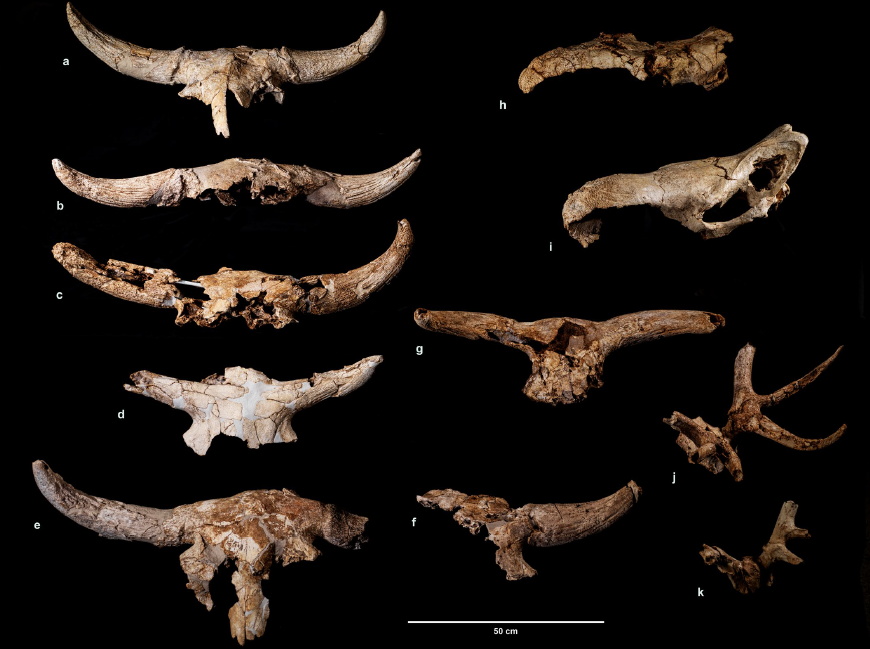
El conjunto de materiales del nivel 3, que abarca 2 metros de potencia y 27 m2, incluye restos faunísticos de grandes ungulados (bisonte y uro y, en menor cantidad, ciervo, rinoceronte y caballo). Entre los 2265 restos de fauna destacan 35 cráneos, todos con apéndices (cuernos óseos, astas, cuernos queratinosos), y algunos correspondientes a animales de tonelada y media de peso. ¿Cómo acabaron allí? Veamos varios datos para construir una posible narrativa:
- De los 35 cráneos, 28 son de bóvidos, 5 de cérvidos (todos machos con astas) y 2 de rinoceronte. No se han encontrado otros animales distintos de esos cráneos con sus apéndices conservados.
- Son escasos los elementos poscraneales, así como dientes, mandíbulas y maxilares. Junto con la evidencia de modificación antrópica de los cráneos (sobre todo percusión directa y algunas marcas de corte), esto sugiere que los cadáveres de estos animales habrían sido procesados primero fuera de la cueva, después se habrían traído los cráneos a ella y extraído los cerebros (por lo menos a un rinoceronte), el tuétano y los ojos como alimento. En el mismo nivel 3 se han hallado 1421 útiles líticos musterienses de distintas tipologías.
- Algunos de estos restos están asociados a pequeñas hogueras. El 34% del registro arqueológico del nivel 3 tiene signos de afección por fuego.
- No parece una actividad relacionada con la subsistencia, sino de carácter ritual.
- Aunque ciertos aspectos de la posición y la preservación de los restos están condicionados por procesos naturales, estos no explican por sí solos la selección recurrente de cráneos ni su organización espacial (Villaescusa et al., 2026).
- Estos cráneos se han encontrado a lo largo de todo el nivel, lo que sugiere una práctica continuada durante años, tal vez milenios. La transmisión de este comportamiento de generación en generación refuerza la consideración cultural de esta actividad.
Estas características y la ausencia de otro tipo de huesos de animales procesados (como sí hay en otros yacimientos próximos dentro del mismo sistema) otorgan a Des-Cubierta una aparente exclusividad para una actividad simbólica. En tal caso, ¿cuál era el objetivo de la misma? Algunas hipótesis planteadas son:
- Una actividad relacionada con la acumulación de «trofeos» de caza, observando paralelismos con ejemplos etnográficos. Desde luego, es una actividad muy novedosa en la cultura neandertal conocida hasta ahora. Pero también es novedosa esta acumulación tan singular de cráneos.
- Una actividad ritual vinculada con los restos de pequeñas hogueras. ¿Ritos iniciáticos? ¿Magia propiciatoria?
- El pequeño tamaño del espacio utilizado parece indicar que podría considerarse un santuario de caza.
- Alguna expresión de la relación simbólica entre neandertales y el mundo natural.
Tal vez la explicación de los trofeos de caza (una acción que parece tan moderna) se nos hace algo grande. En todo caso, la recurrencia del comportamiento da a entender el asombro, respeto, admiración u otra emoción que les causaba a aquellos neandertales los cráneos de grandes animales completados con sus apéndices. Esa emoción se transformó en algún tipo de expresión cultural. ¿O se convirtió en una costumbre? ¿Acaso un acto estacional, cuando ocupaban el lugar? En todo caso, hemos conocido un trocito más de la cultura de aquellos humanos que nos producen una mezcla de fascinación y desasosiego.
Referencias
- Baquedano, E., Arsuaga, J.L., Pérez-González, A. et al. (2023). A symbolic Neanderthal accumulation of large herbivore crania. Nat Hum Behav (2023).
- Novedades en Pinilla del Valle, el Valle de los Neandertales | Nutcracker Man
- ¿Posibles rituales neandertales en Pinilla del Valle? | Nutcracker Man
Neandertal hunting trophies in Des-Cubierta Cave?
This post summarizes the publication and interpretation of the archaeological material from level 3 of the Des-Cubierta Cave (Madrid), accumulated in a deposit two meters deep about 43-70 ka (thousands of years) ago, when the Neandertals were the only human species in the area. Among these materials, there is an astonishing group of 35 megafauna skulls (bison, aurochs, deer, rhinoceros). What happened for such an accumulation to end up there?
Let us begin by highlighting the uniqueness of the site. At 1,100 m in the center of the Iberian Peninsula, it is an unusual human occupation, that of «mountain Neandertals» that took advantage of the rich resources offered by the valley, and of the caves and shelters with a privileged location for the control of the area, its forests and open spaces. In fact, there are at least four sites with Neandertal presence, one of them dating to 90 ka. They shared or alternated the use of space with other predators and scavengers, and competed for the large herbivores that inhabited the valley, following the herds up the course of the present-day Lozoya River. They were very selective in the animals they consumed, and left remains of the Mousterian tools they made to process them, mainly from local quartz, although they also moved to nearby areas in seach of flint.
The Des-Cubierta Cave was discovered in 2009. Until now, the most outstanding finding had been a mandible with six teeth of a Neandertal child of about 3-5 years of age in level 2, nicknamed the ‘Niña de Lozoya’ (although the sex of the individual is not certain). Level 2 also contains 734 Mousterian lithic remains. The number of horns, skulls and small bonfires close to the human remains had suggested some kind of ritual or burial activity, although the context was not sufficient to confirm it. In recent years, further excavation and study of the site and its dating have made it possible to refine what may have occurred there.
The remains from level 3 cover 2 m of stratigraphic thickness and 27 m2. Among them are the faunal remains of large ungulates (bison and aurochs, followed at some distance by deer, rhinoceros and horse). Among the 2,265 faunal remains, 35 skulls stand out, all with appendages (bony horn cores, antlers, keratinous horns), and some corresponding to animals weighing up to a ton and a half. How did they end up there? Let’s look at some data to reconstruct a possible storyline:
- Of the 35 skulls, 28 are from bovids, 5 from cervids (all males with antlers) and 2 from rhinoceroses. No animals other than those of these skulls with their preserved appendages have been found.
- Postcranial elements, teeth, mandibles and maxillae are scarce. Together with the evidence of anthropic modifications of the skulls (mostly direct percussion and some cut marks), this suggests that the carcasses of these animals may have been processed first outside the cave; then the skulls may have been brought into the cave, where the brains (at least of one rhinoceros), the marrow and the eyes may have been extracted as food. In the same level 3, 1,421 Mousterian lithic tools of different typologies were found.
- Some of these remains are associated with small hearths. 34% of the archaeological record of level 3 has signs of fire impact.
- It does not seem to be an activity related to subsistence, but rather of a ritual nature.
- Although certain aspects of the position and preservation of the remains are conditioned by natural processes, these alone do not explain the recurrent selection of crania nor their spatial organization (Villaescusa et al., 2026).
- These skulls have been found throughout the entire level, suggesting a continuous practice over years, perhaps millennia. The transmission of this behavior from generation to generation reinforces the cultural interpretation of this activity.
The aforementioned features and the absence of other types of processed fauna bones (as are present in other nearby sites within the same system) give Des-Cubierta an apparent exclusivity for a symbolic activity. In this case, what was the purpose of it? Some hypotheses proposed are:
- An activity related to the accumulation of hunting ‘trophies’, observing parallels with ethnographic examples. This is indeed a very novel behavior among the Neandertal cultural activities known so far. But this unique accumulation of skulls is also novel.
- A ritual activity linked to the remains of small fires. Initiatory rites? Propitiatory magic?
- The small size of the space used seems to indicate that it could be considered a hunting shrine.
- Some expression of the symbolic relationship between Neanderthals and the natural world.
Perhaps the explanation of hunting trophies (an action that seems so modern) is somehow overstated. In any case, the recurrence of the behavior hints at the astonishment, respect, admiration or other emotion that the skulls of large animals, complete with their appendages, elicited to those Neandertals. And that emotion was transformed into some kind of cultural expression. Or did it become a custom, a kind of seasonal action, repeated when they occupied the site? In any case, we have learned one more fragment of the culture of those humans who inspire in us a mixture of fascination and uneasiness.
References
- Baquedano, E., Arsuaga, J.L., Pérez-González, A. et al. (2023). A symbolic Neanderthal accumulation of large herbivore crania. Nat Hum Behav (2023).
- Novedades en Pinilla del Valle, el Valle de los Neandertales | Nutcracker Man
- ¿Posibles rituales neandertales en Pinilla del Valle? | Nutcracker Man
 Nutcracker Man
Gracias por la aportación.
Resulta complejo determinar el por qué o para qué del yacimiento.
Imagina dentro de 5 millones de años lo que pueden inferir del uso de algunos de los emplazamientos que ahora nos resultan cotidianos, ¿hacertarán con el uso real? Un abrazo.
Me gustaLe gusta a 1 persona