
Mi esposa critica a veces mi pasión por la paleontropología, con el argumento de que esta ciencia se basa en «interpretaciones muy subjetivas de unos cuantos huesos”. Y no le falta algo de razón: a mediados del siglo XX esto era más o menos así porque, en el fondo, efectivamente eran pocas las evidencias de fósiles, escasos los medios y muchas las lagunas de conocimiento. En los últimos 40 años han sucedido dos hitos fundamentales:
1) se ha multiplicado por 10 el número de fósiles clave encontrados para entender mejor la evolución humana, y
2) hemos empezado a poder recuperar y analizar el material genético de los mismos.
Esto nos conduce a evidencias y ya no tanto a interpretaciones con mayor o menor solidez. Los siguientes 4 casos son un claro ejemplo de estas evidencias, que a su vez abren nuevas incógnitas.
Caso 1. En octubre 2014 comenzamos a leer sobre un maxilar y varios dientes encontrados en Xujiayao (norte de China), con datación 60-120 Ka, y coetáneos por tanto a la ocupación de los Neandertales en Europa y de Homo sapiens en África. El análisis morfológico de los dientes muestra rasgos bien diferenciados con respecto a Homo sapiens, y semejanzas con Homo neanderthalensis y Homo erectus. Tal vez se trate de una forma descendiente de los Homo erectus asiáticos, o simplemente una variedad local de una peculiar dentición que caracterizó a una determinada población. En cualquier caso, es una pieza más en el puzle del conocimiento de las poblaciones asiáticas, y en concreto del norte de China, en el Pleistoceno Medio.
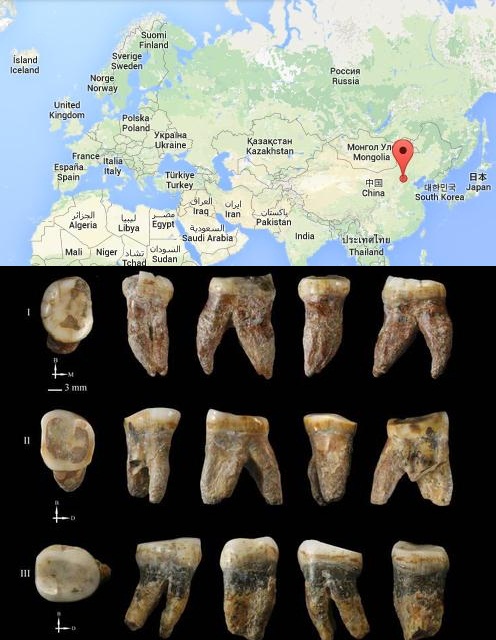
Dientes de Xujiayao. Foto: Google Maps & CENIEH
Caso 2. El ADN recuperado de uno de los primeros europeos, que vivió hace 36.000 años en Kostenki (oeste de Rusia), nos ha dado muchísima información sobre los antecesores de las poblaciones euroasiáticas.
Hace alrededor de 36.000 años las poblaciones euroasiáticas se separaron por lo menos en tres grandes grupos: los euroasiáticos occidentales, los orientales y un tercero cuyos descendientes habrían desarrollado las características únicas de la mayoría de los pueblos no africanos, y antes se habrían cruzado con los neandertales.
Al contrastar los datos que disponemos de los genomas antiguos en esta región, obtenemos que:
- Hay una continuidad genética entre los pobladores de hace 36.000 años y los de hace 8.000 años. Esto implica una «supervivencia» al Último Máximo Glacial de los cazadores-recolectores europeos del Paleolítico. Durante 30.000 años las mismas poblaciones fueron cambiando en cuanto a estrategias de supervivencia al clima y en cuanto a culturas (Auriñaciense, Gravetiense), pero sin llegar conjuntos nuevos de genes.
- Hace 8.000 años poblaciones provenientes de Oriente Medio llevaron a Europa la agricultura y provocaron un cambio estructural importante. También esto implicó algunos cambios físicos relevantes como un tono de piel más claro.
- Al comienzo de la colonización de Eurasia, los primeros Homo sapiens que abandonaron África se cruzaron con los Neandertales hace 54.000 años, antes de que las poblaciones eurasiáticas se separaran en grupos. Este rastro Neandertal es el que llevan todas las poblaciones actuales con ascendencia euroasiática (chinos, escandinavos, norteamericanos…).
- Extrañamente, no se observa nuevo mestizaje de los euroasiáticos occidentales con los neandertales en los siguientes 10.000 años. ¿No volvieron a coincidir en Europa o hubo otras causas?
- Además, se ha identificado en el genoma de Kostenki un linaje antepasado no conocido en ningún otro grupo humano. Esto también estaba presente en las poblaciones de Oriente Medio que llegaron a Europa hace 8.000 años y se mezclaron con los cazadores-recolectores occidentales. Este grupo euroasiático desconocido se cruzó por tanto con el resto de poblaciones euroasiáticas en momentos anteriores a hace 36.000 años (dejando su rastro en el genoma de Kostenki), pero en los 30.000 años siguientes no se conoce ningún rastro, tal vez por quedarse aislado por una barrera geográfica.
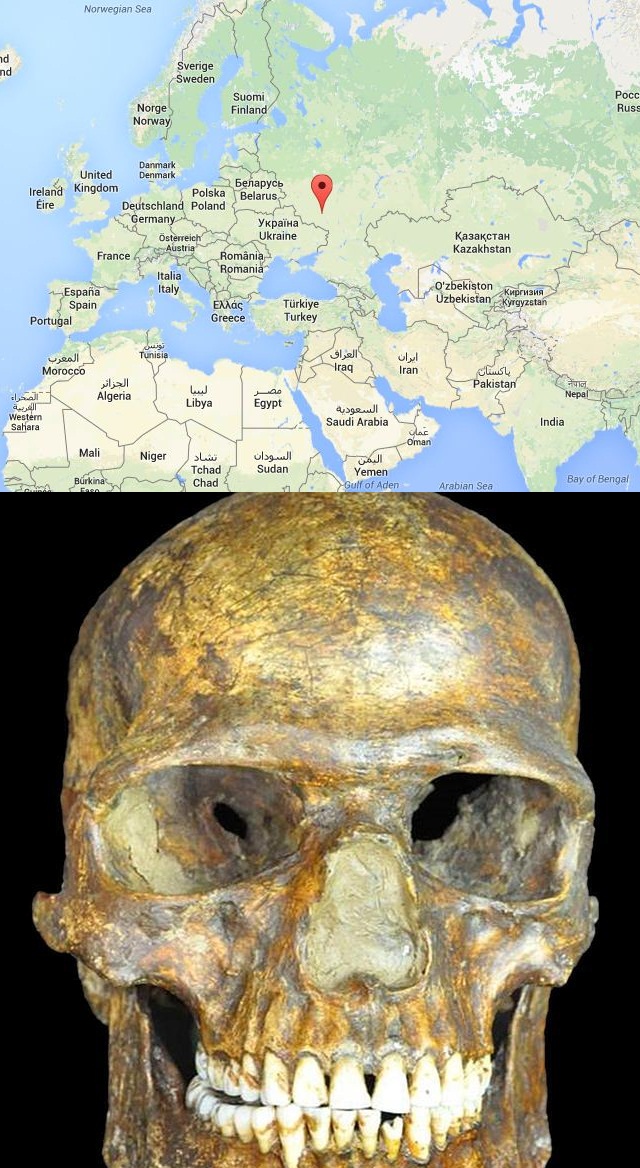
Cráneo de Kostenki. Foto: Google Maps & Science
Caso 3. Los Denisovanos son uno de los mayores hallazgos en paleoantropología en lo que llevamos de siglo. Una especie distinta, basada solo en dos molares y la falange de un dedo encontrados en la cueva de Denisova (Siberia). Fue publicada en 2010, y el segundo molar en 2015, y su genética nos ha permitido saber muchas cosas de ellos:
- Es una especie distinta a Homo sapiens pero se cruzaron con estos en algún punto del continente asiático. Dejaron rastro en el 5% del ADN de algunos pueblos actuales de Oceanía y en el 0,2% del ADN de los nativos americanos. Los Denisovanos tienen con Homo sapiens un ancestro común hace 800 Ka.
- Se ha llegado a encontrar incluso rastro denisovano en el ADN mitocondrial de la población de la Sima de los Huesos hace 430 Ka., indicando una introgresión en alguna población antepasada.
- Se cruzaron también con los Neandertales, y tienen un ancestro común que vivió hace 300 Ka.
- Se cruzaron también con una especie que desconocemos, que tiene sus orígenes hace 1 Ma. y de la que quedó en su genoma entre el 2,7-5,8%. Esa especie pudo ser Homo erectus, o una antepasada de esta, o una especie euroasiática de la que no hemos encontrado aún evidencia.

Falange de Denisova. Foto: Google Maps & Bence Viola
Caso 4. Desde octubre 2014 conocemos el material genético más antiguo de un humano moderno, que vivió hace 45.000 años en Ust’-Ishim (oeste de Siberia, en la misma zona horaria que Denisova). Este material fue extraído de un fémur que se encontró en 2008, y de cuyo estudio se desprenden muchos datos interesantes:
- No es antepasado de ninguna población humana que conozcamos (genéticamente hablando).
- Su genoma muestra el mismo nivel de mestizaje con los Neandertales que el resto de poblaciones actuales no africanas.
- Los antepasados de Ust’-Ishim se cruzaron con los Neandertales hace 50-60 Ka, probablemente antes que los antepasados de los humanos modernos.
- No muestra ningún mestizaje con los Denisovanos.
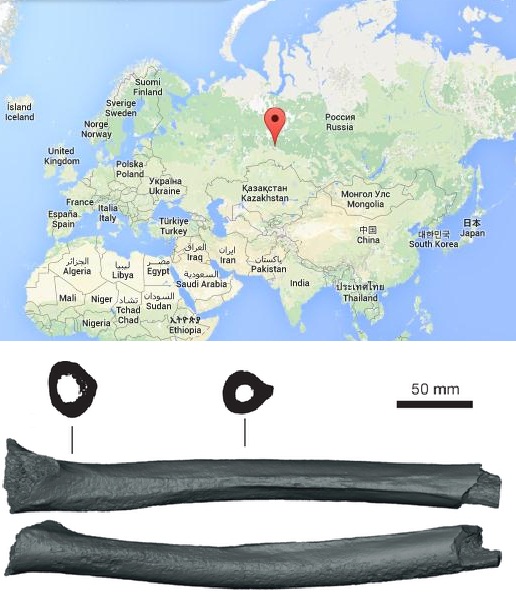
Fémur de Ust’-Ishim. Foto: Google Maps & Qiaomei Fu et al, Nature
Concluyendo, la paleogenética genera nuevos interrogantes, tanto sobre posibles poblaciones ancestrales que aún no hemos identificado, como sobre relaciones filogenéticas que aún no sabemos encajar en el árbol evolutivo humano. Las nuevas evidencias que vayamos encontrando nos permitirán cerrar esas dudas pero, seguramente, abrirán otras nuevas.
¿Encontraremos más fósiles como para conocer la morfología de los Denisovanos? ¿Lograremos conocer más detalle de las poblaciones que habitaron Asia en el Pleistoceno Superior y Medio? ¿Cuál será el siguiente material genético más antiguo que lograremos descifrar?

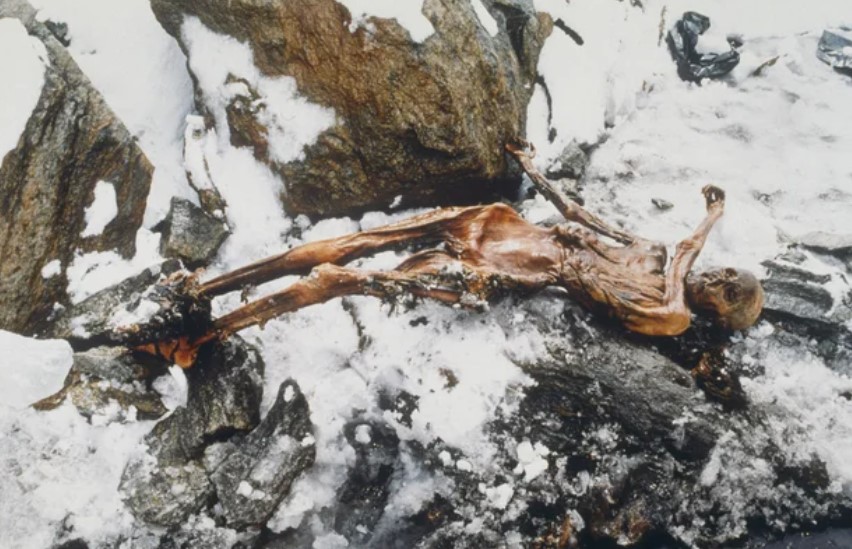


 Nutcracker Man