Quick summary of the new hominin footprints at Laetoli

Quick summary of the new hominin footprints at Laetoli

Background

  • Since the 1970s several prints and trails of mammal, bird and insect have been identified in 18 sites (labelled from A to R) out of 33 total palaeontological localities in the Laetoli area, Tanzania.
  • In 1978 a 27-meter footprint trail was found at Site G, with about 70 footprints corresponding to 3 hominins.  They were bipedal, had big toes in line with the rest of their foot, and their gait was «heel-strike» followed by «toe-off», that is, the same way modern humans walk.
  • The footprints were ascribed to Australopithecus afarensis, as suggested by the dating (3.66 Ma) and the fossils found nearby in the same sediment layer.

The new find

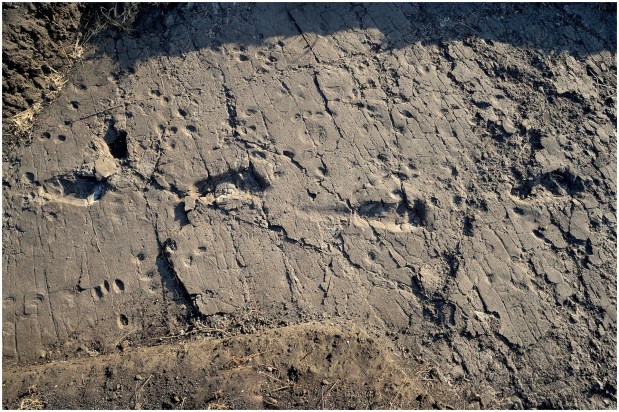
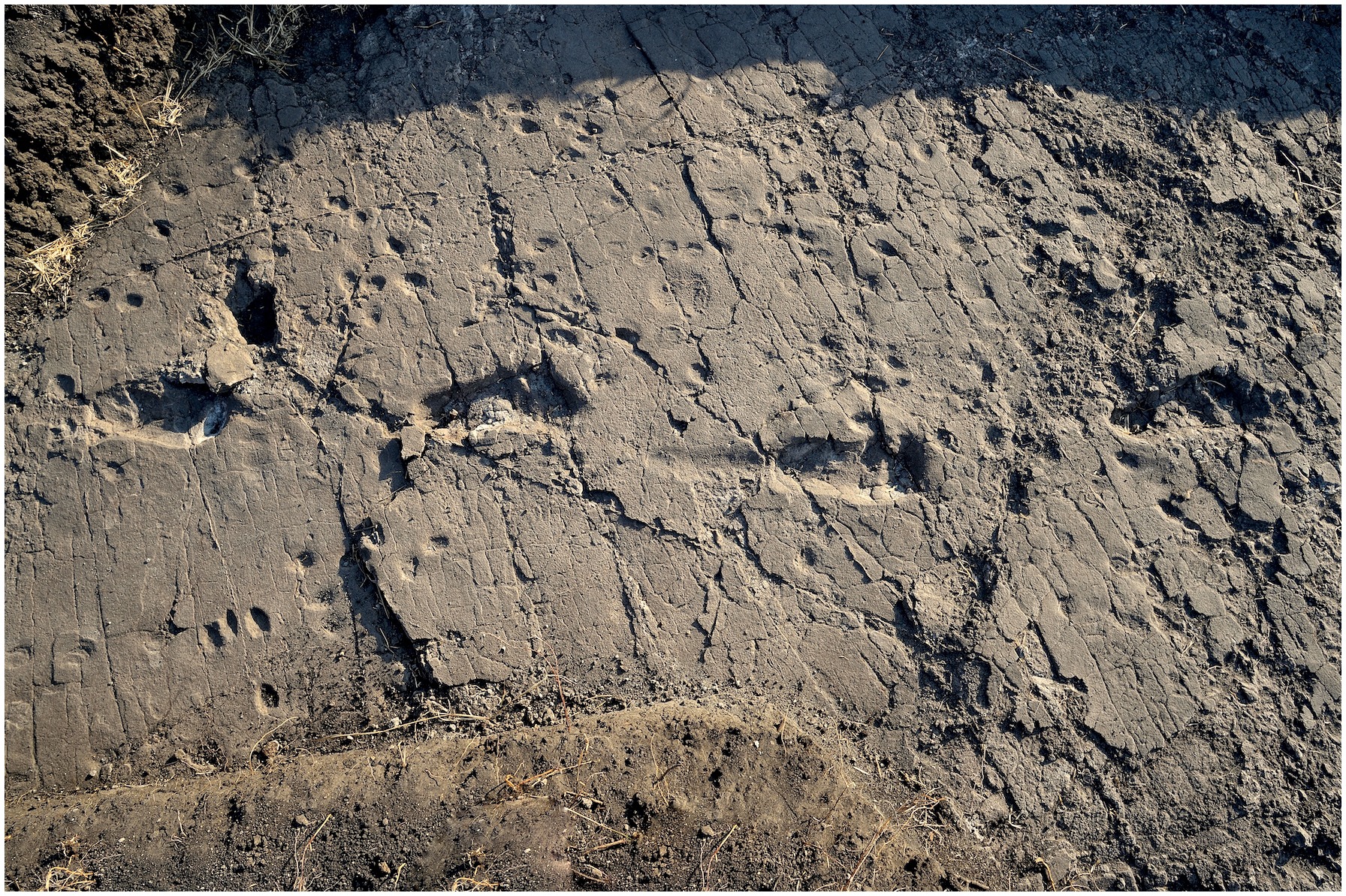
  • Site S is located only 150 m away from Site G. In October 2014 some excavation works were executed to assess the impact of building a museum including a protective covering for the Site G tracks. This yielded 14 hominin tracks plus other 529 tracks left by other animals including bovids, equids, girafs, rhinos…
Laetoli footprints

Figure 7 from Masao et al. 2016. Original caption: Southern part of the hominin trackway in test-pit L8. Footprints L8/S1-1, L8/S1-2, L8/S1-3 and L8/S1-4 are visible from left to right. The heel drag mark is well visible posteriorly to L8/S1-3.
Sigue leyendo

3 hominins found on October 21st

3 hominins found on October 21st

The following three iconic hominins were found on October 21st!

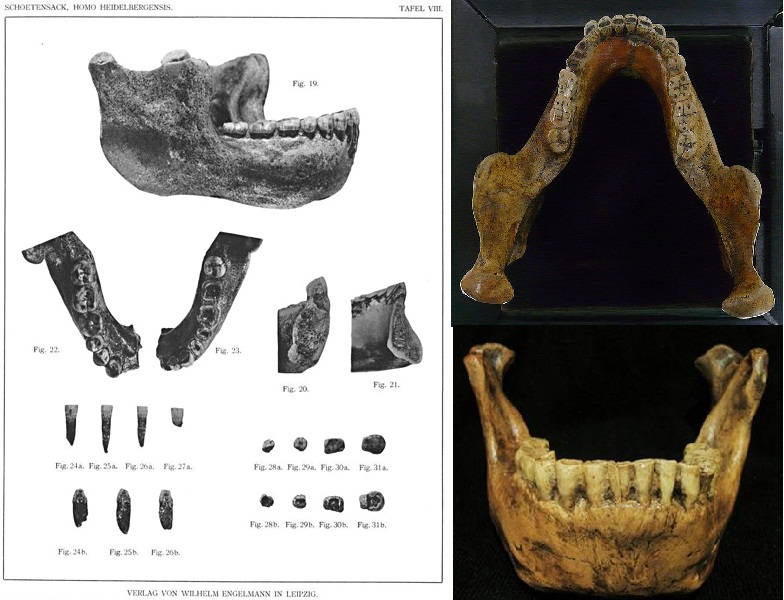
The Mauer mandible – Oct 21st, 1907

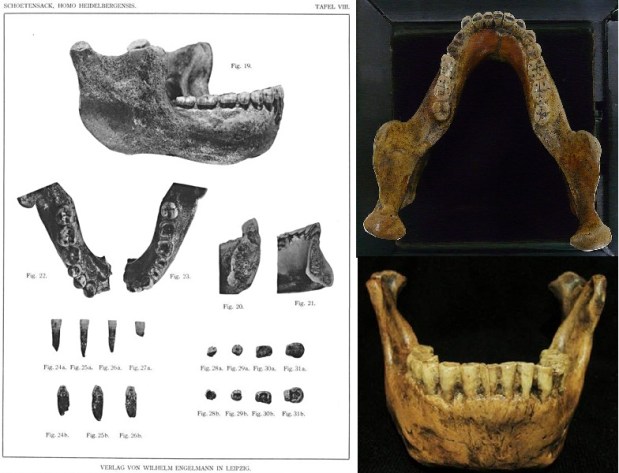
It was found in the sediments by the Neckar river near Mauer, Germany, and dated to 500-600 Ka. The fossil was so different from other Homo specimens that a new species was defined for it: Homo heidelbergensis. This mandible remained the oldest hominin known in Europe for almost a century, until the 1990s.

It combines primitive features (large size, robust wide mandibular body, thick enamel, broad ramus) and modern features (molars are smaller than Homo erectus but some similar to modern humans). It is relatively short, the symphysis slopes down and back from the teeth and lacks a projecting chin.

Mauer mandible

Mauer mandible. Image credit: Schoetensack O. Der Unterkeifer des Homo heidelbergensis aus den Sanden von Mauer bei Heidelberg (1908)

Sigue leyendo

The key Olduvai Hominids

The following is the list of key hominids found in the Olduvai Gorge archeological sites. They are coded as OH nn (Olduvai Hominid number of fossil). The list is sorted by species and code. You can click on any pic to enlarge.

They are real treasures to understand the human origins in the last 2 million years. Don’t miss the bonus surprise at the end – Enjoy!

Homo habilis

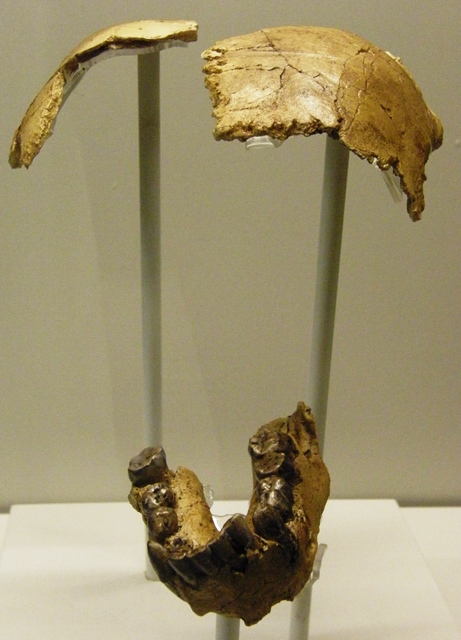
OH 7 (1.7 Ma. Site FLK NN). It consists of 24 bones (parietal bones as most significant), teeth and mandible of a 10-12 year-old male. Discovered by the oldest son of Louis and Mary Leakey on his 20th birthday, it was thus nicknamed “Johnny’s Child”. It is the type specimen of the Homo habilis species.

OH 7 Homo habilis

OH 7 Homo habilis. Photo: Roberto Sáez

Sigue leyendo