Conclusiones de los hallazgos en Orce

Orce (Granada, España) tiene un conjunto de yacimientos que va cobrando cada vez más importancia por la antigüedad de los restos encontrados allí, coetáneos con los más antiguos de Atapuerca (1,4 millones de años), y a solo 300.000 años de los restos más remotos de Dmanisi.

La campaña de excavaciones de este año ha producido resultados muy interesantes, para entender la forma de vida en esa zona y en esa época:

  • En 2002 se encontró en el yacimiento de Barranco León un primer molar fosilizado de un niño de unos 10 años, datado en 1,4 millones de años. En 2013 se publicó. Este año no han aparecido nuevos restos humanos, pero sí una enorme cantidad de restos de fauna: mamuts, hipopótamos, rinocerontes, caballos, ciervos, bóvidos.

orce

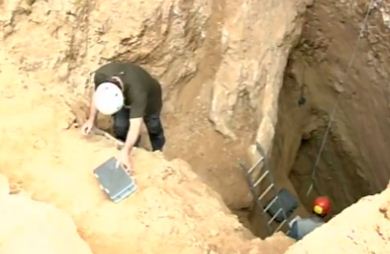
  • Una zona de taller hallada con más de 3000 útiles líticos indican la importante actividad humana en el sitio: vivían en grupos de posiblemente decenas de individuos, pero no en las cuevas sino en el límite con la zona boscosa, con árboles cerca por si era necesario encaramarse.
  • Los restos de un elefante totalmente desarticulado y al que extrajeron los sesos, sugiere alimentación y por tanto cuidado de sus bebés y de sus ancianos.
  • Eran carroñeros, descuartizaban a los mamuts, pero no llevaban consigo los utensilios sino un núcleo del que sacaban lascas junto al animal. Competían con hienas de 150 kg.
  • Su entorno constituía el mayor vergel de toda Europa en el Pleistoceno.

Esperemos nuevos hallazgos en la próxima campaña, tal vez más restos humanos que puedan arrojar luz sobre qué homínidos vivían allí, y sobre el famoso y polémico “hombre de Orce”, un fragmento de cráneo de 1,8 millones de años con algunas características humanas (pero muchas dudas) encontrado en 1982.

Atapuerca: some key figures

In 2014 we had in Spain the privilege of holding the XVII Congress of UISPP (Union International de Sciences Préhistoriques et Protohistoriques) in Burgos. The organiser was the Atapuerca Foundation, as a recognition of the decisive value that Atapuerca provides to the world of Prehistory, Archaeology and Paleoanthropology.

At the time, this was the Congress with the highest number of scientific articles submitted ever in the history of UISPP: 2,000 articles presented by 3,000 authors.

Atapuerca is one of the most relevant sites for human evolution in the world, probably the most important one for the last half-million years period. Some key figures below can support this statement.

Sima de los Huesos site in Cueva Mayor:

atapuerca-sima

  • A total of 7,500 fossils found so far, belonging to 29 individuals of the same population from 430,000 years ago.
  • They are ancestor of Neandertals. For one decade this population was assigned to the species Homo heidelbergensis, but the extended study of this huge fossil record discarded this assignment.
  • 17 skulls found. One of them is the most complete skull of a Middle Pleistocene Homo: Cranium number 5 (‘Miguelón’)
  • The most complete pelvis in the fossil record, called ‘Elvis’.
  • Sima also provided some tiny bones of the middle ear, really strange to find.
  • The enormous number of fossils contrast with the area they are buried in Sima. Only 20 centimeters are excavated from a 1 m2 area every season.
  • Only in 2014 200 hominin fossils have been found. This figures doubles the total number of human fossils extracted from the rest of sites worldwide.
  • Since the beginning of excavations in 1978, the Sima has provided more than half of the Homo fossils worldwide.

Gran Dolina has provided more than 100 fossils of 6 individuals from 800,000 years ago classified as a new species, Homo antecessor. They are one of the largest set of the oldest fossils in Western Europe.

Sima del Elefante has provided one of the oldest human fossils in Western Europe, dated to 1.3 million years.

Not only Paleolithic but Atapuerca also has more than 200 Neolithic sites in a 314 km2 area.

Overall, Atapuerca shows a human occupation since 1.3 million years B.P. until Roman age in the 4th century.

Nuevos hallazgos en las excavaciones de verano

Los veranos suelen ser muy jugosos para noticias sobre evolución humana, procedentes de las campañas de excavaciones que se realizan en los principales yacimientos.

Para empezar, ayer los directores de Atapuerca (España) han anunciado los hallazgos de esta campaña. En resumen:

  • En el yacimiento Gran Dolina, donde se hallaron los fósiles denominados Homo antecessor de 800.000 años, se ha hecho un sondeo donde han encontrado 10 metros más de existencia de relleno de sedimentos (es decir, de posibles antiguas cuevas). Estos 10 metros más de profundidad dan un potencial para descubrir, en las próximas temporadas, restos de hasta 1,7 millones de años. ¡Estamos hablando de la antigüedad del yacimiento de Olduvai en África!

Sondeo Gran Dolina

Sigue leyendo

About the 17 skulls of Sima de los Huesos

The Atapuerca system in northern Spain is a unique place for human evolution. In particular, the cave ‘Sima de los Huesos’ is among the sites with the largest number of hominin fossils. For 30 years, more than 7,500 fossils from 29 individuals have been recovered, representing all parts of the skeleton. They are dated to 430,000 years, which makes them the oldest fossils with Neandertal features. All the individuals belong to the same biological population, which is terribly valuable to analyse their variations, sexual differences and patterns of development.

In 2014 the analysis of the 17 skulls from Sima was published. 7 skulls of the collection had not been published before. This study came 21 years after the description of the first 3 skulls.

17 skulls Sima de los Huesos

The 17 skulls of Sima de los Huesos. Credit: Javier Trueba, Madrid Scientific Films

Sigue leyendo