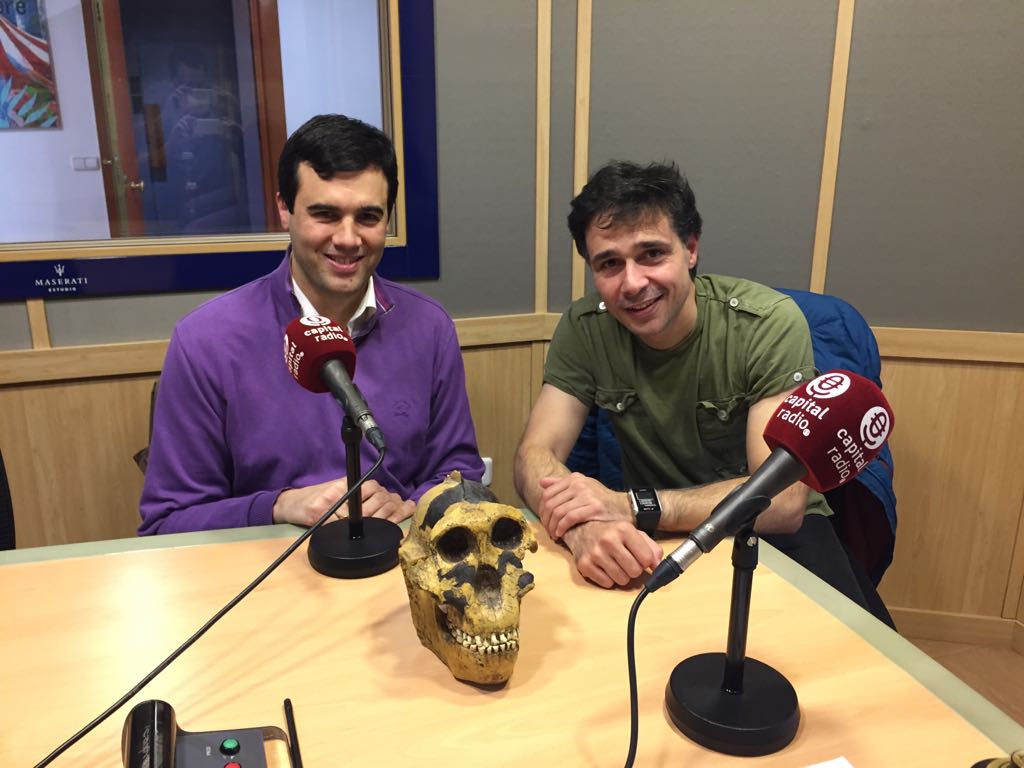
Enlace al podcast del programa A Ciencia Cierta 31/01/2018 en CV Radio, dirigido por Antonio Rivera. Participo hablando de los orígenes de los homininos y de nuestra especie Homo sapiens. A partir del minuto 2:05 y hasta el 22:20.
Entrevistas
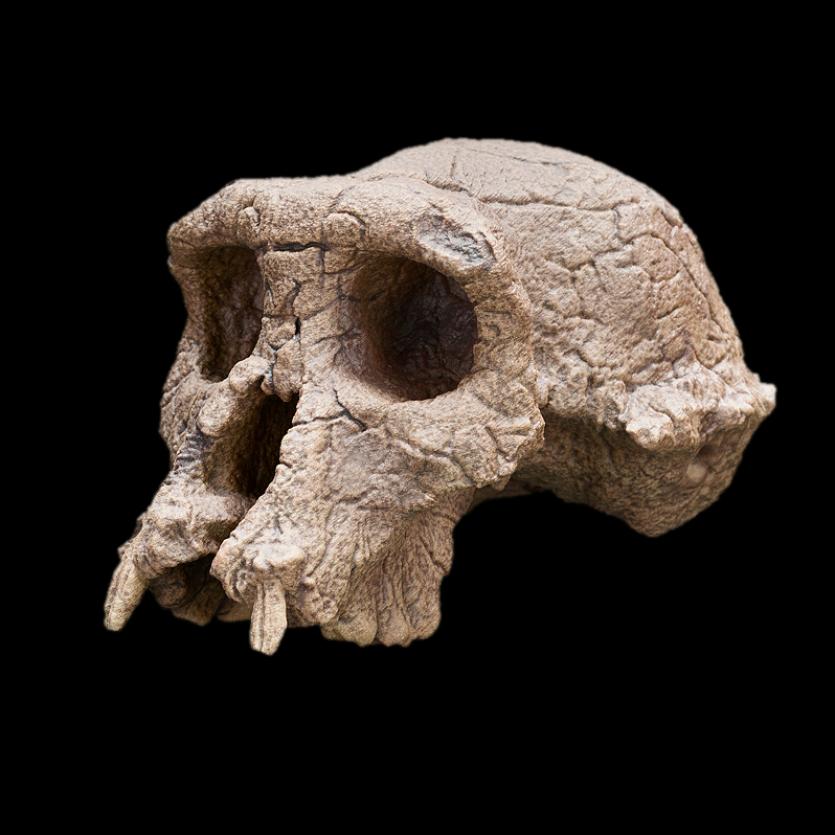
Parántropos en Ágora Historia
Os dejo el podcast descargable de mi participación en el programa Ágora Historia del 27 de enero de 2018, hablando sobre los Parántropos (a partir del minuto 5:10):
Índice de cuestiones:
- 5:10 Presidiendo el estudio… Nutcracker Man, el Hombre Cascanueces.
- 6:53 ¿Qué son los parántropos?
- 8:22 ¿No les da un toque agresivo su morfología?
- 9:18 ¿Qué les diferencia de los australopitecos?
- 11:00 Sobre la falta de formación en prehistoria y la típica pregunta… «¿Descendemos del mono?»
- 12:50 ¿Dónde y cuándo viven los parántropos?
- 15:50 ¿Cómo eran y por qué la peculiaridad de su morfología?
- 18:24 ¿Cómo fue su evolución?
- 21:03 ¿Unificar o diversificar especies?
- 22:52 ¿Hemos podido reconstruir el modo de vida de los parántropos?
- 26:55 ¿Parántropos o australopitecinos robustos?
- 27:45 ¿Cómo se extinguieron?
- 29:48 ¿Qué hay en NutcrackerMan.com?
Bringing hominin fossils back to life: interview with paleoartist John Bavaro
Art and science. Paleoart is the scientific reconstruction of extinct life. Complementing the study of the fossil record, paleoart has become a major contribution of deep scientific knowledge combined with the author’s artistic insight. It was a great pleasure for me to meet John Bavaro, who has great knowledge and passion in the Human Evolution field. I hope you will enjoy this interview with John for Nutcracker Man, including several examples of his very up-to-date work…
Can you describe the process to reconstruct the appearance of hominins? In particular, how do you combine the fossil evidence together with other sources to provide them movement and life?
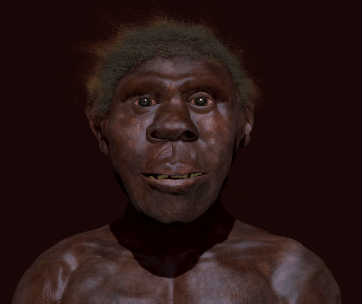
I try to apply my own understanding to the anatomy to the model before I look at other artists so then I have a fresh perspective. But my niche is in digital art which I teach at Edinboro University of Pennsylvania.
I look at Kennis Brothers, John Gurche, Elisabeth Daynès, Viktor Deak, giants in the field who do reconstructions and I’m in awe.
We are a visual species. And I for one want to explore the possibilities. Perhaps that’s what sets us apart. Art follows science and vice versa. For instance, the Lucy skeleton or the Turkana boy skeleton totally “rewrote” history. In the case of Lucy we now know that she was hybrid tree climber AND a walker. In the case of Turkana Boy there’s clues about gait and the posture etc. It’s a puzzle that constantly revealing itself. So art follows science in the tendency for equivocation and I’m not being insulting to science when I say that. In fact, every discovery that comes out now days “rewrites” the understanding of the “mythical textbooks”. Now with the internet we’re getting more impatient. I for one, think that’s lazy clickbait. A teaser, hubristic or both If I read something that says that “new discovery which changes the way we look at things” I say, “Yeah, until the next time which is probably at this pace, a month away.” I know that science is continuingly changing, which is counter to the current understanding (in popular culture) of it which that it is static. Those in the field know about this, but modern society holds it up as basically like religion. “Well, Science says…….” But scientists know that it is ever-changing process. In this era, changes happen at dizzying pace that I can’t keep up with them quickly enough. It’s like same way that T-Rex was pictured just 50 or 60 years ago with the tail down instead of up.
Your work is very up to date with all recent finds in human evolution. Let’s discuss three examples: Jebel Irhoud, Homo naledi and Denisovans.
Jebel Irhoud
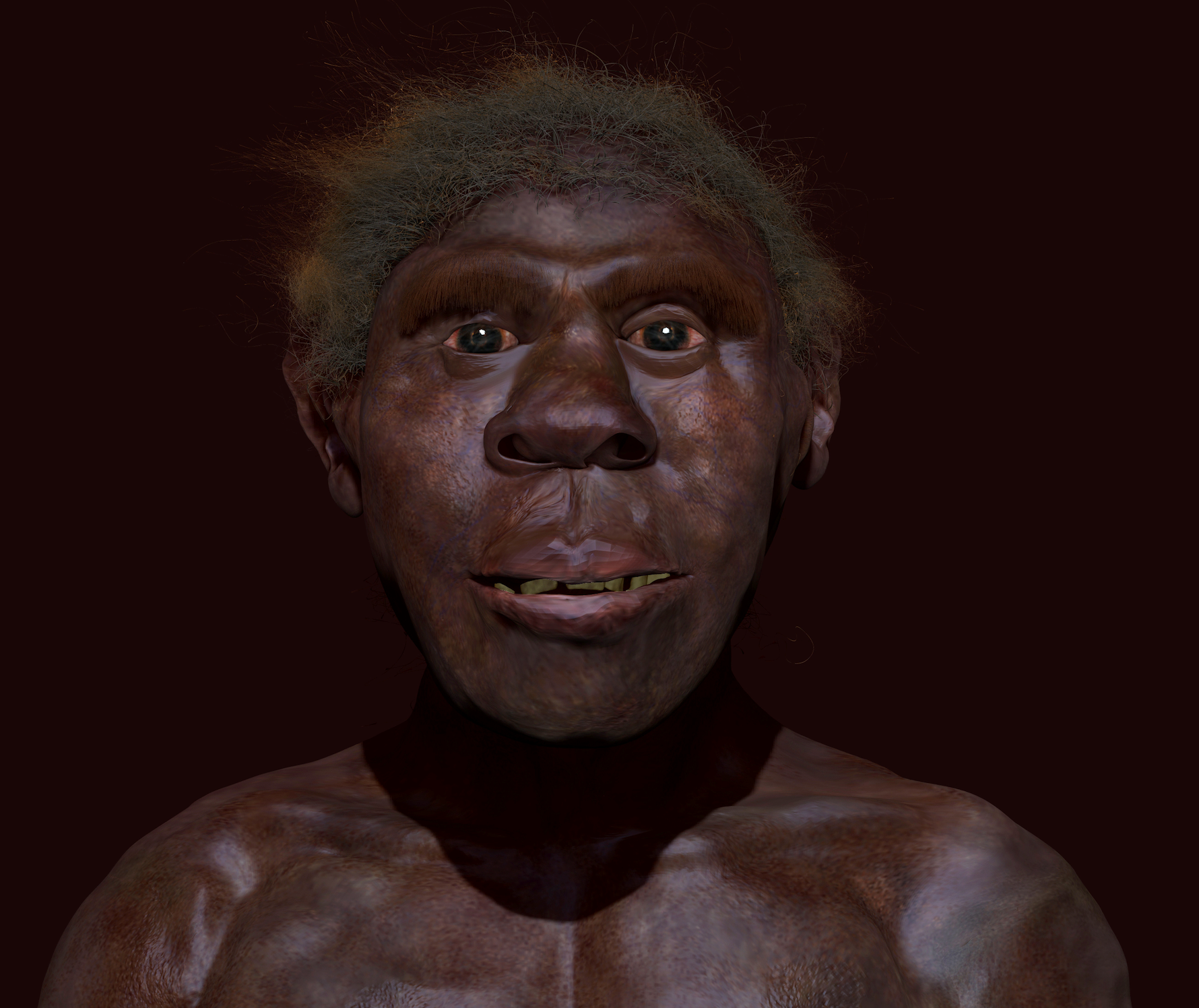
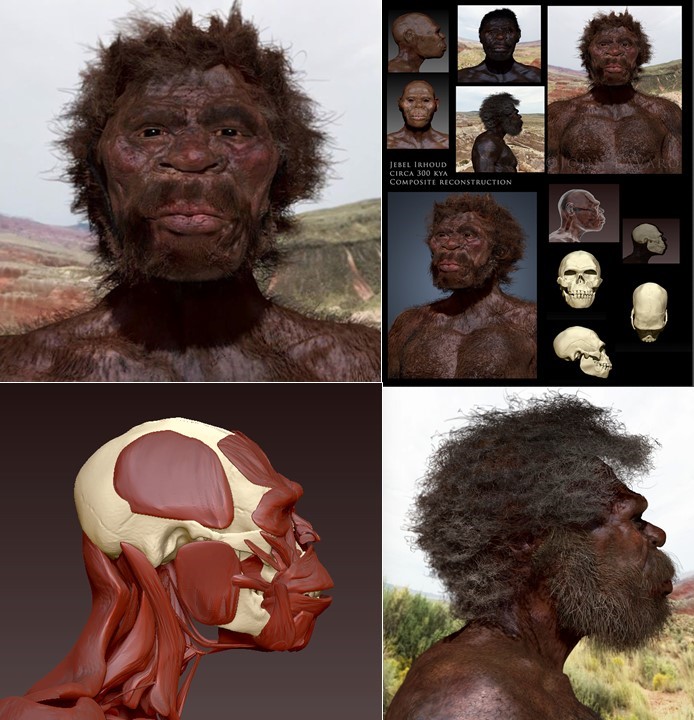
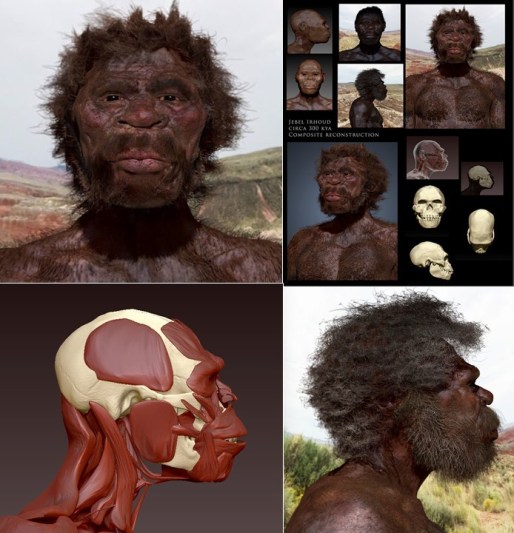
You have created an illustration of the human from Jebel Irhoud, dated to 300 Ka and recently proposed as the earliest Homo sapiens known so far. However this has been contested because of the primitive traits of this specimens which are different from other skulls like Omo or Herto dated to 200 Ka. To what extend did you consider the Jebel Irhoud as ‘modern’ in your illustration?
La Middle Stone Age (MSA) en Olduvai, con José Manuel Maíllo
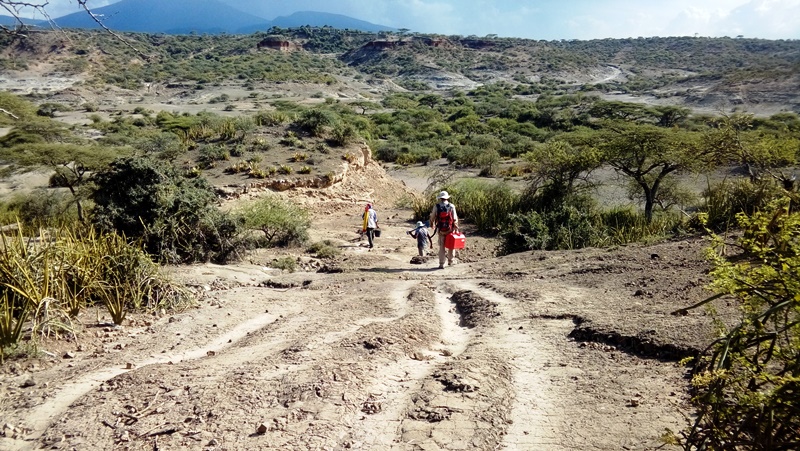
He tenido el placer de conversar con José Manuel Maíllo sobre su trabajo en la Garganta de Olduvai (Tanzania), donde estudia los yacimientos de la Middle Stone Age: el momento de la aparición y desarrollo de los primeros humanos modernos en África. Sabemos un poco sobre cómo eran, la morfología de unas decenas de especímenes, aunque debatimos aún sobre a qué especie asignar muchos de ellos. ¿Y qué hay sobre su modo de vida? Veamos…
El proyecto Ndutupai: el lecho Ndutu
Comenzamos en junio de 2016 con un trabajo de prospección localizando yacimientos. En el lecho Ndutu, en la parte superior de la Garganta de Olduvai, localizamos en superficie piezas líticas atribuibles a la Middle Stone Age que aparecían en la parte baja del sitio, y también fauna, así que este año decidimos volver y comenzar la excavación.
Le llamamos yacimiento Victoria Cabrera Site (VCS) y se descubrió porque encontramos piezas líticas y restos de fauna en superficie y una pieza embebida en un corte que realizó una torrentera estacional. Además, tenemos otros sitios localizados para futuras excavaciones. Nuestro yacimiento se encuadra en el lecho Ndutu, donde se interestratifican varios niveles tobáceos con otros de origen fluvial. Hemos excavado una trinchera longitudinal de 24 x 2 metros. En cinco niveles hemos encontrado industria lítica y fauna. Sigue leyendo
Interview with Chris Stringer
In this interview for Nutcracker Man, Chris Stringer addresses some key recent discussions in the human evolution field, such as:
- The origin of the anatomically modern humans. The frontier between ‘archaic’ and ‘modern’ Homo sapiens.
- Reassessment of the Homo heidelbergensis species.
- Early and late dispersals of modern humans outside Africa.
- Behavioural modernity vs. Anatomical modernity.
Finally, he talks about a new book he is working on.
Chris Stringer is one of the most important researchers in the field of human evolution. He is Research Leader in Human Origins at the Natural History Museum and previously director of the Ancient Human Occupation of Britain project. His work is searchable on the Museum’s website and you can follow him on twitter.
1. The origin of the so-called anatomically modern humans is not so clear now in the post-Neanderthal genome era. In 2016, you argued a new paradigm by setting the origin of our species Homo sapiens back to 500 K years ago rather than 200 K. What is the rationale for that? What is for you an ‘archaic’ Homo sapiens? And what is the frontier between ‘archaic’ and ‘modern’ Homo sapiens?