The Top 10 hominin #FossilFriday tweets of 2015

Here’s my little annual tradition!! This is the second year I do this sort of special ‘summary annual report’: the list of my favorite #FossilFriday tweets in 2015, from number 10 to 1.

For those who don’t know what “FossilFriday” means… Every Friday on twitter, scientists and interested amateurs share pics of their favorite fossils, related scientific papers or blog posts, by using the hashtag #FossilFriday. This is a great manner to show famous or rare pieces of museum collections, and to share research works. I usually join this and tweet about a different hominid fossil every Friday. Now, let’s start!   Sigue leyendo
A few quick reflections by John Hawks

Reading John Hawks’ reflections on social media is usually a pleasure. I wanted to collect here just 20 of my favorite ones. Enjoy!   —   Thanks, Professor

Serious

  • 1- When I think of the students who are entering paleoanthropology, they are going to be my scientific peers five, ten years from now. Why in the world would I not want them to have the best, most current data from our fieldwork? I’m struggling to understand the mindset of scientists who think that students shouldn’t see the fossils.
  • 2- Four years ago we did an event at the AAPA meetings where we brought casts of fossils for the membership. What stunned me is that these practicing and teaching biological anthropologists were not only crowding around the new discoveries. They were also straining to see famous fossils that have been out of the ground for 40 years, that they’ve never been able to examine because casts cannot be bought. We must change this culture.
  • 3- Tired of seeing question «Which hominin was the stone tool maker?» In absence of further evidence, the correct answer is «Any and all».
  • 4- Paleoanthropologists have an unfortunate tendency to smuggle in assumptions and then act as if the resulting conclusions were real.
  • 5- I’m a scientist. I don’t want to people to accept that what I say is accurate. I want to give them the tools to find out for themselves.

Sigue leyendo

El yacimiento Rua dos Correeiros

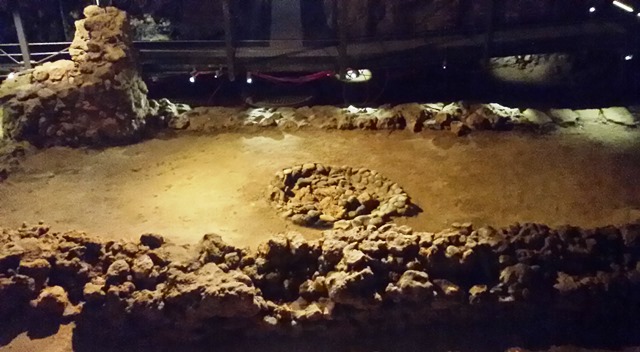
Aunque mi foco es el Paleolítico, recientemente tuve ocasión de visitar en Lisboa un tesoro arqueológico poco conocido, que explica la actividad desarrollada allí durante 2700 años en los distintos periodos que ha vivido. Me impresionó y me empujó a compartir estas líneas sobre él.

El Núcleo Arqueológico da Rua dos Correeiros, es un yacimiento que apareció en 1991 en el subsuelo de una sede del banco portugués Millenium bcp, cuando iban a construir un aparcamiento bajo el edificio. Se decidió proteger el sitio y continuar la excavación, que duró 4 años. Ahora mismo es visitable en los varios niveles de que se compone.

El yacimiento está localizado en una ubicación privilegiada a la orilla del estuario del Tajo, ocupada ininterrumpidamente en distintos periodos de tiempo:

  • Edad del Hierro / Periodo Ibero-Púnico. Los restos más antiguos son una división estructural de viviendas construidas hace 2700 años por mercaderes cartagineses, que comerciaban con metales preciosos.

Vivienda ibero-púnica, Rua dos Correeiros. Foto: Roberto Sáez

Sigue leyendo

Premios Bitácoras 2015: ¡GRACIAS! THANK YOU!

Por 2º año, Nutcracker Man ha estado presente en los Premios Bitácoras a los mejores Blogs hispanos. Y de nuevo, el puesto obtenido es tremendo: 18º en la categoría Educación y Ciencia (y 6º entre los blogs de Ciencia, que fue la categoría en 2014 antes de fusionarse con Educación).

Mi enorme gratitud a los que me habéis votado. Y a todos por leerme. Y enhorabuena a los finalistas 🙂 [Clasificación final]

A special mention and big THANK YOU to all the English-speaking voters – Nutcracker Man reached the 18th position in Education & Science category, 6th among the Science blogs

Las tres poblaciones antepasadas de los europeos actuales

Se ha publicado el estudio genético más completo sobre una población de euroasiáticos occidentales, correspondiente a un rango temporal desde hace 2300 años y 8500 años. La antigüedad mayor del rango corresponde al momento previo a la revolución del modelo económico y social que llamamos Neolítico.

La muestra ha sido sobre 230 individuos, de entre ellos 163 nuevos, e incluyendo por primera vez genoma de agricultores neolíticos de Anatolia (Turquía), de los que provienen los primeros agricultores europeos.

Resumo en cuatro ideas lo que sabemos hasta ahora:

1) Se confirma el hallazgo de una tercera contribución genética de los antepasados de los europeos modernos, tal como se había previsto en otra publicación anterior de 2014 sobre el genoma de 9 individuos. De esta forma, la población actual europea proviene de una mezcla genética de 3 poblaciones a lo largo de los últimos 8000 añosSigue leyendo