El puzle evolutivo humano en el sureste de Asia y Australia

El estudio e interpretación de los homininos encontrados en el sureste asiático y de los restos más antiguos de Australia, es fundamental para el entendimiento de la evolución humana en aquellas regiones. En particular, una cuestión importante es la emergencia de las morfologías modernas y su posible vinculación con las poblaciones arcaicas del Pleistoceno y con los primeros aborígenes australianos. Quiero ilustrar a través de tres casos el fenomenal puzle evolutivo con el que contamos, por el momento difícil de resolver.
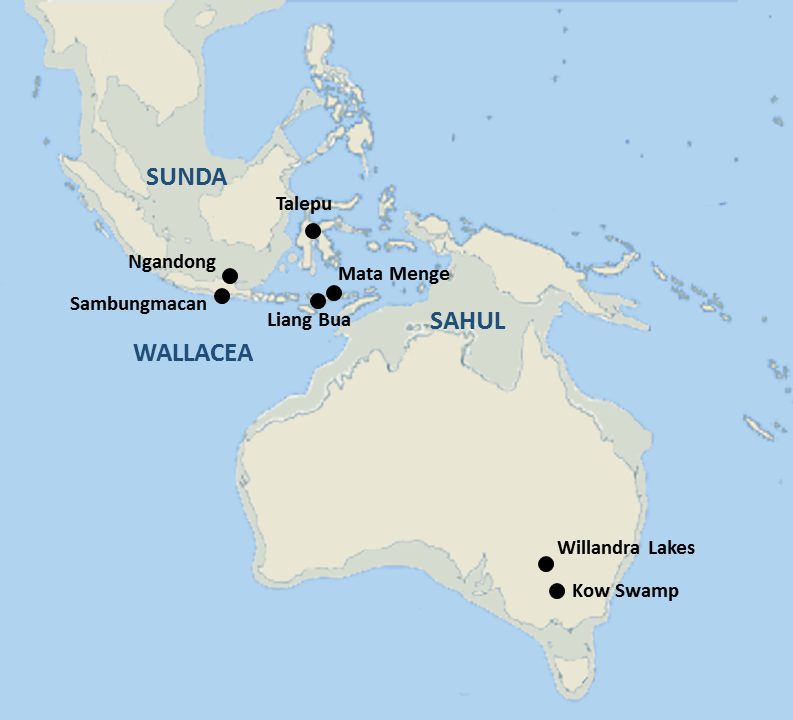
Mapa Sunda y Sahul

Mapa con los sitios mencionados en este artículo. Sunda y Sahul son las dos plataformas continentales que existían durante los periodos glaciales del Pleistoceno Superior. Sunda estaba formada por la península malaya y las islas de Sumatra, Java, Bali y Borneo. Sahul estaba formada por Australia, Nueva Guinea y Tasmania. Imagen: Roberto Sáez

Sigue leyendo →

La historia de Lucy, la historia de todos

Don Johanson es el descubridor de Lucy, tal vez el homínido más famoso, una Australopithecus afarensis que vivió en la actual Etiopía hace 3,2 millones de años. El 24 de noviembre celebramos el cumpleaños de su hallazgo en 1974. Johanson no solo es una eminencia en el campo de la paleoantropología: también es un comunicador excepcional. En octubre tuve la ocasión de verle en una conferencia en el Museo Arqueológico Regional de Madrid, la primera que hace en España a sus ya 73 años de edad. Contó unas cuantas cosas alrededor de la historia del hallazgo de Lucy y, sobre todas ellas, me quedé con una frase que dejó caer para nuestra consideración: 

“La historia de Lucy es la historia de todos nosotros”

La historia de Lucy

La historia de Lucy, la historia de todos. Don Johanson. Foto: Roberto Sáez

¿Qué puede significar esto? A mí la charla de Johanson me inspiró tres pequeñas reflexiones:

Sigue leyendo →

A moment of silence for the death of Homo heidelbergensis

«Every time I see the name ‘Homo heidelbergensis’ I feel a little queasy», John Hawks

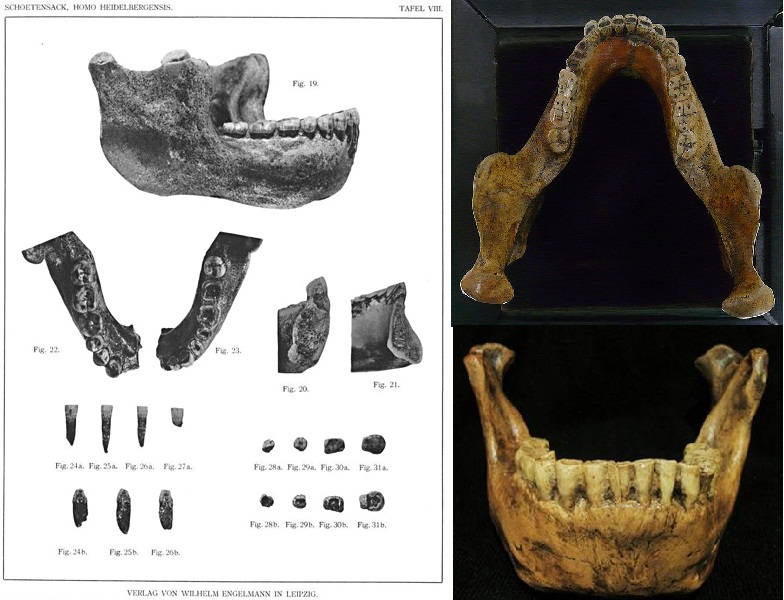
Homo heidelbergensis was defined in 1908 as a new species for a mandible that was found one year before, by the Neckar river in Mauer, near Heidelberg in Germany. This mandible, dated to 600 Ka, was the oldest hominin fossil in Europe for the following 90 years.

In the meantime, the name Homo heidelbergensis remained with no further assignment to any other fossil for seven decades, until it was resurrected to try to classify a group of 20+ specimens of the Middle Pleistocene from dispersed sites in Europe (Arago in France, Petralona in Greece…), Africa (Kabwe in Zambia, Bodo in Ethiopia…) and Asia (Yunxian and Dali in China…). They all had in common some derived features from Homo erectus, basically a larger brain which reflects in complex tools (e.g. the wooden spear fron Schöningen, Germany).

«In reality this species should have stayed dead instead of being resurrected in the 1980s», Juan Luis Arsuaga

They were ‘archaic Homo sapiens’, fossils dated to between 600 Ka and 200 Ka just before the Homo sapiens appeared in Africa. It was made necessary to assign them to a species which demonstrated an evolutionary path between erectus and modern humans, being also ancestor of neandertals. Homo heidelbergensis was the choosen name, although there was not any complete description of this species.

Sigue leyendo →

3 hominins found on October 21st

3 hominins found on October 21st

The following three iconic hominins were found on October 21st!

The Mauer mandible – Oct 21st, 1907

It was found in the sediments by the Neckar river near Mauer, Germany, and dated to 500-600 Ka. The fossil was so different from other Homo specimens that a new species was defined for it: Homo heidelbergensis. This mandible remained the oldest hominin known in Europe for almost a century, until the 1990s.

It combines primitive features (large size, robust wide mandibular body, thick enamel, broad ramus) and modern features (molars are smaller than Homo erectus but some similar to modern humans). It is relatively short, the symphysis slopes down and back from the teeth and lacks a projecting chin.

Mauer mandible

Mauer mandible. Image credit: Schoetensack O. Der Unterkeifer des Homo heidelbergensis aus den Sanden von Mauer bei Heidelberg (1908)

Sigue leyendo →

El triple enterramiento de Dolní Věstonice

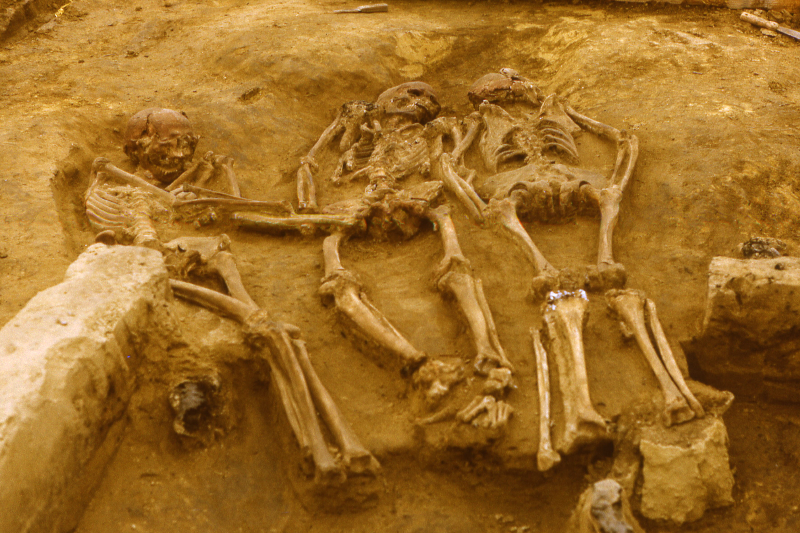
Hace 31.000 años en Dolní-Věstonice (actual República Checa), un grupo de humanos realizó un triple enterramiento que fue descubierto en 1986, muy singular en cuanto a la disposición de los cuerpos y otras características que recojo aquí:

Enterramiento de Dolní Věstonice

El triple enterramiento de Dolní Věstonice. Fuente imagen: Mittnik A. et al. A Molecular Approach to the Sexing of the Triple Burial at the Upper Paleolithic Site of Dolní Věstonice (2016)

Sigue leyendo →