
«Every time I see the name ‘Homo heidelbergensis’ I feel a little queasy», John Hawks
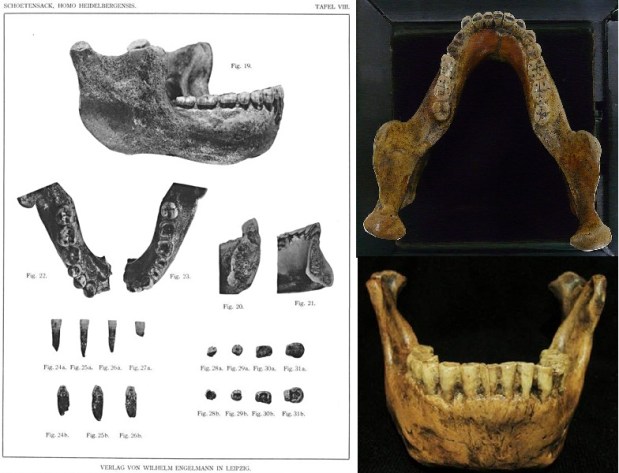
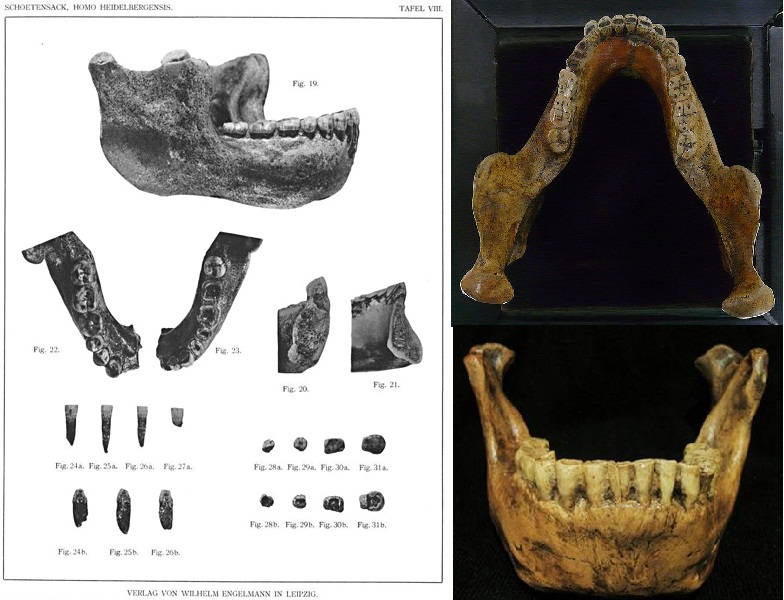
Homo heidelbergensis was defined in 1908 as a new species for a mandible that was found one year before, by the Neckar river in Mauer, near Heidelberg in Germany. This mandible, dated to 600 Ka, was the oldest hominin fossil in Europe for the following 90 years.
In the meantime, the name Homo heidelbergensis remained with no further assignment to any other fossil for seven decades, until it was resurrected to try to classify a group of 20+ specimens of the Middle Pleistocene from dispersed sites in Europe (Arago in France, Petralona in Greece…), Africa (Kabwe in Zambia, Bodo in Ethiopia…) and Asia (Yunxian and Dali in China…). They all had in common some derived features from Homo erectus, basically a larger brain which reflects in complex tools (e.g. the wooden spear fron Schöningen, Germany).
«In reality this species should have stayed dead instead of being resurrected in the 1980s», Juan Luis Arsuaga
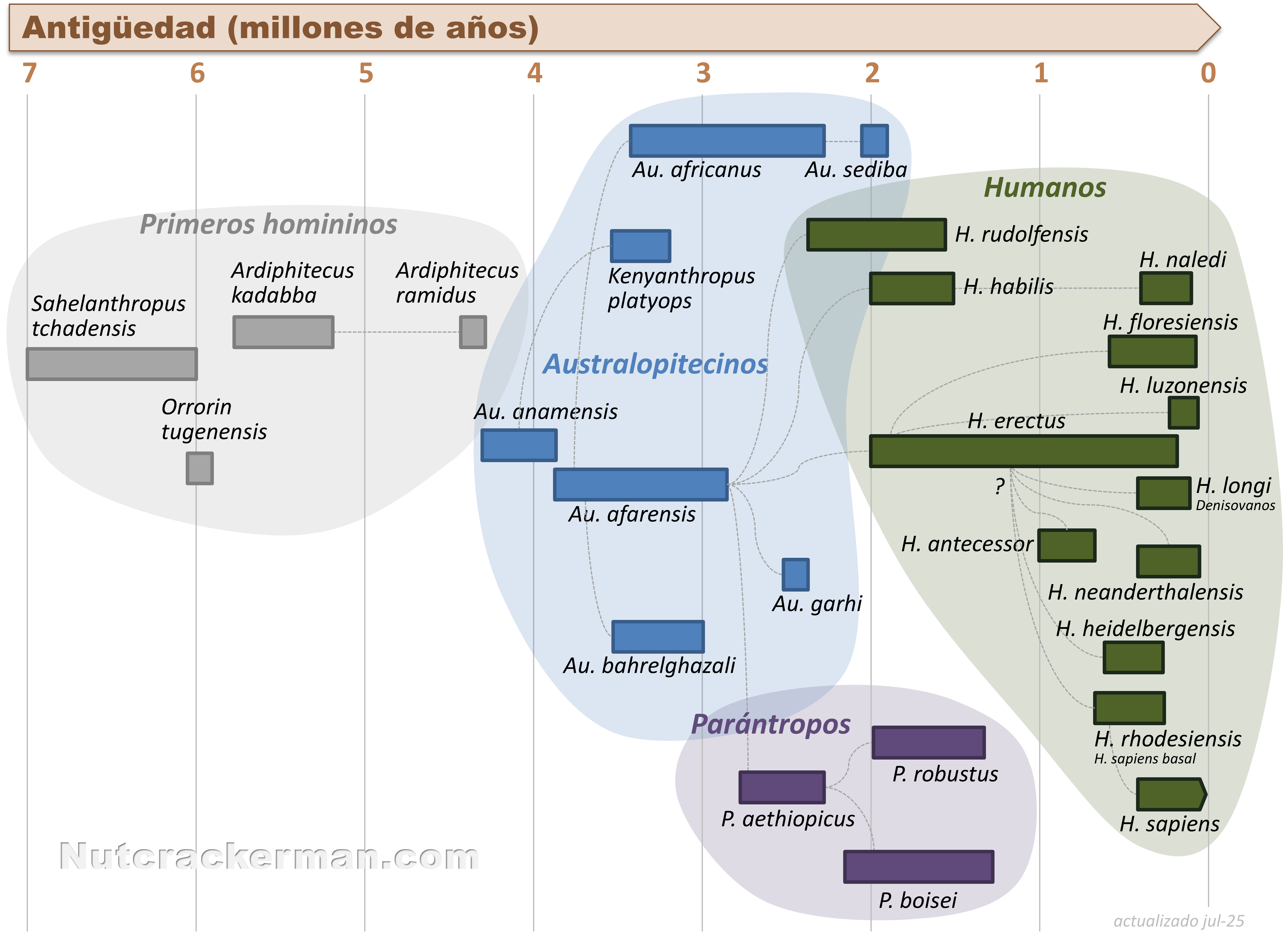
They were ‘archaic Homo sapiens’, fossils dated to between 600 Ka and 200 Ka just before the Homo sapiens appeared in Africa. It was made necessary to assign them to a species which demonstrated an evolutionary path between erectus and modern humans, being also ancestor of neandertals. Homo heidelbergensis was the choosen name, although there was not any complete description of this species.

 Nutcracker Man