Zinj and the mastication

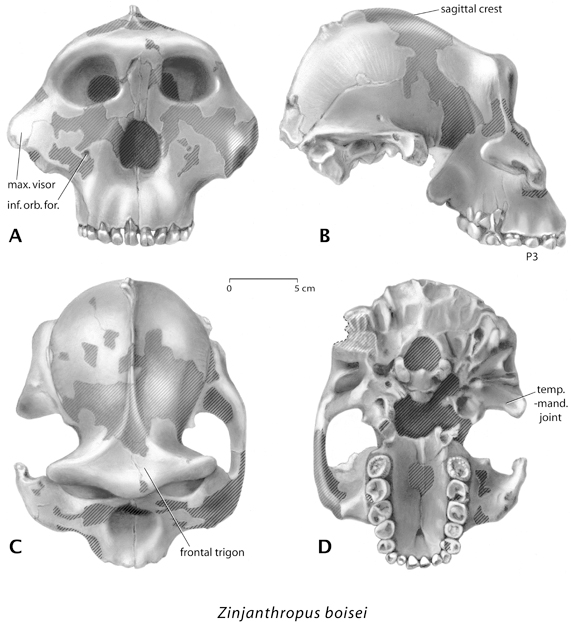
This is a nice and rare illustration by Bonnie Miljou of Zinjanthropus boisei (‘Zinj’), the species defined by Louis Leakey for the iconic fossil OH 5 – later assigned to Paranthropus boisei. Due to the hyper-robust morphology of its dentition, OH 5 was nicknamed ‘Nutcracker Man’, which gives the name to this blog.

The morphology of this cranium is clearly associated with the masticatory function. In particular, the illustration highlights 5 features:

Zinjanthropus boisei

Zinjanthropus boisei. Illustration by Bonnie Miljou

Sigue leyendo

El Pendo: un lugar de agregación, un lugar mágico

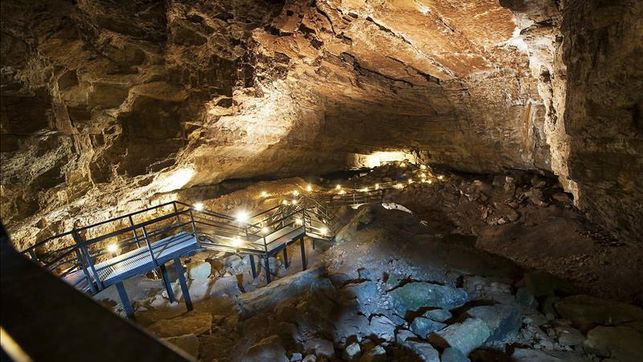
Situada cerca de Escobedo de Camargo (Cantabria, norte de España), la cueva El Pendo tiene una gran diferencia respecto al resto de cuevas cántabras: consiste en una única gran sala de impresionantes dimensiones, 22 m alto, 45 m ancho y 80 m largo. El aporte de agua se produce de forma transversal y no vertical, por lo que la cueva carece de espeleotemas.

Un derrumbamiento sucedido hace entre 9000-1500 años cambió su forma radicalmente. En la actualidad, varios metros del vestíbulo exterior están bajo rocas, donde antes estarían protegidos por una enorme visera, lugar en que se desarrollaría buena parte de la actividad humana. A pesar del derrumbamiento, el aporte de luz desde la boca de la cueva es actualmente notable, y sería mayor durante su ocupación en el Paleolítico.

De entrada, su forma, dimensiones e iluminación ya le dan a la cueva un carácter muy especial, algunos dirían mágico, que ayuda a entender las consideraciones que describiré en este post.

Cueva El Pendo, vista completa

Cueva El Pendo. Vista completa desde la verja de entrada, con el friso de las pinturas al fondo y el yacimiento hacia la mitad de la sala. Foto: eldiario.es

En el interior se han realizado intervenciones arqueológicas durante 100 años, desde finales del XIX hasta los años 1990s.

Sigue leyendo

Paleoantropología: qué esperamos en 2017

Hace casi tres años escribí el artículo “El boom de la paleoantropología”, donde reflexionaba los motivos por los que esta ciencia está teniendo un crecimiento exponencial en los últimos 40 años, y en particular en la última década. Esos motivos los articulaba en dos bloques: 1) Se han descubierto muchísimas más evidencias para estudiar; 2) La genética nos ha permitido incrementar brutalmente el conocimiento sobre nuestros ancestros y las relaciones filogenéticas entre ellos.

La revisión de aquel texto me ha hecho ver que, muchas de las consideraciones que entonces hacía, son totalmente vigentes a la hora de prever lo que 2017 nos puede traer en este ámbito:

Natural History Museum's Hall of Human Origins

Models in the Natural History Museum’s Hall of Human Origins. Photo credit: Chip Clark, NMNH

Se siguen publicando importantes evidencias nuevas, pero también nuevos estudios sobre fósiles ya conocidos:

Y aquí van tres ejemplos de lo que digo:  Sigue leyendo

The Top 10 hominin #FossilFriday tweets of 2016

Finally! The 3rd edition of my little tradition, a particular ‘annual report’: the list of my favorite hominin #FossilFriday tweets in 2016, from number 10 to 1.

For those who do not know what “FossilFriday” means… Every Friday on twitter, people share pics of their favorite fossils, related scientific papers or blog posts, by using the hashtag #FossilFriday. This is a great manner to show famous or rare pieces of museum collections, and to share research works. I join every Friday and tweet about a different hominin fossil. Now, let’s start!

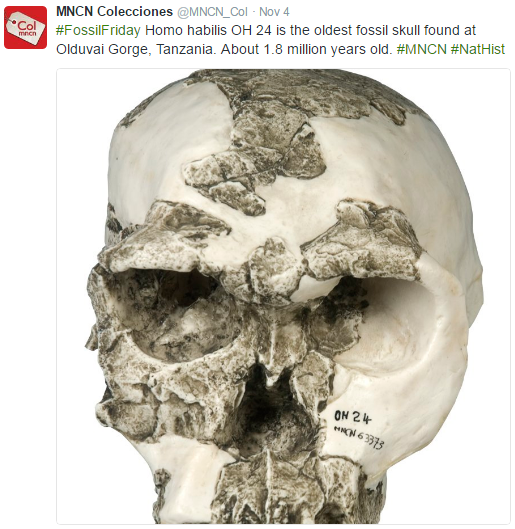
10. Look into the 1.8 Ma eyes of the impressive OH 24  |  MNCN Colecciones 

#FossilFriday 10 Sigue leyendo

Quick summary of the new hominin footprints at Laetoli

Quick summary of the new hominin footprints at Laetoli

Background

  • Since the 1970s several prints and trails of mammal, bird and insect have been identified in 18 sites (labelled from A to R) out of 33 total palaeontological localities in the Laetoli area, Tanzania.
  • In 1978 a 27-meter footprint trail was found at Site G, with about 70 footprints corresponding to 3 hominins.  They were bipedal, had big toes in line with the rest of their foot, and their gait was «heel-strike» followed by «toe-off», that is, the same way modern humans walk.
  • The footprints were ascribed to Australopithecus afarensis, as suggested by the dating (3.66 Ma) and the fossils found nearby in the same sediment layer.

The new find

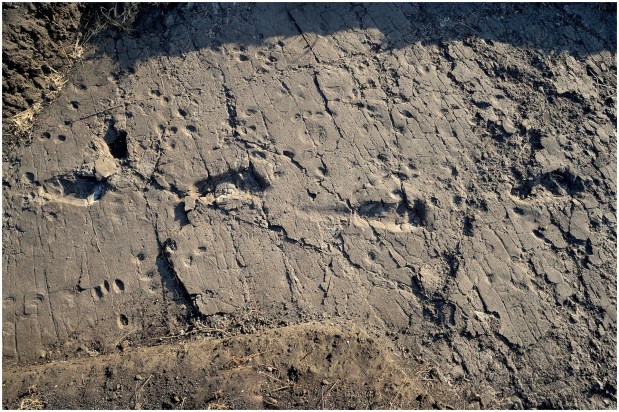
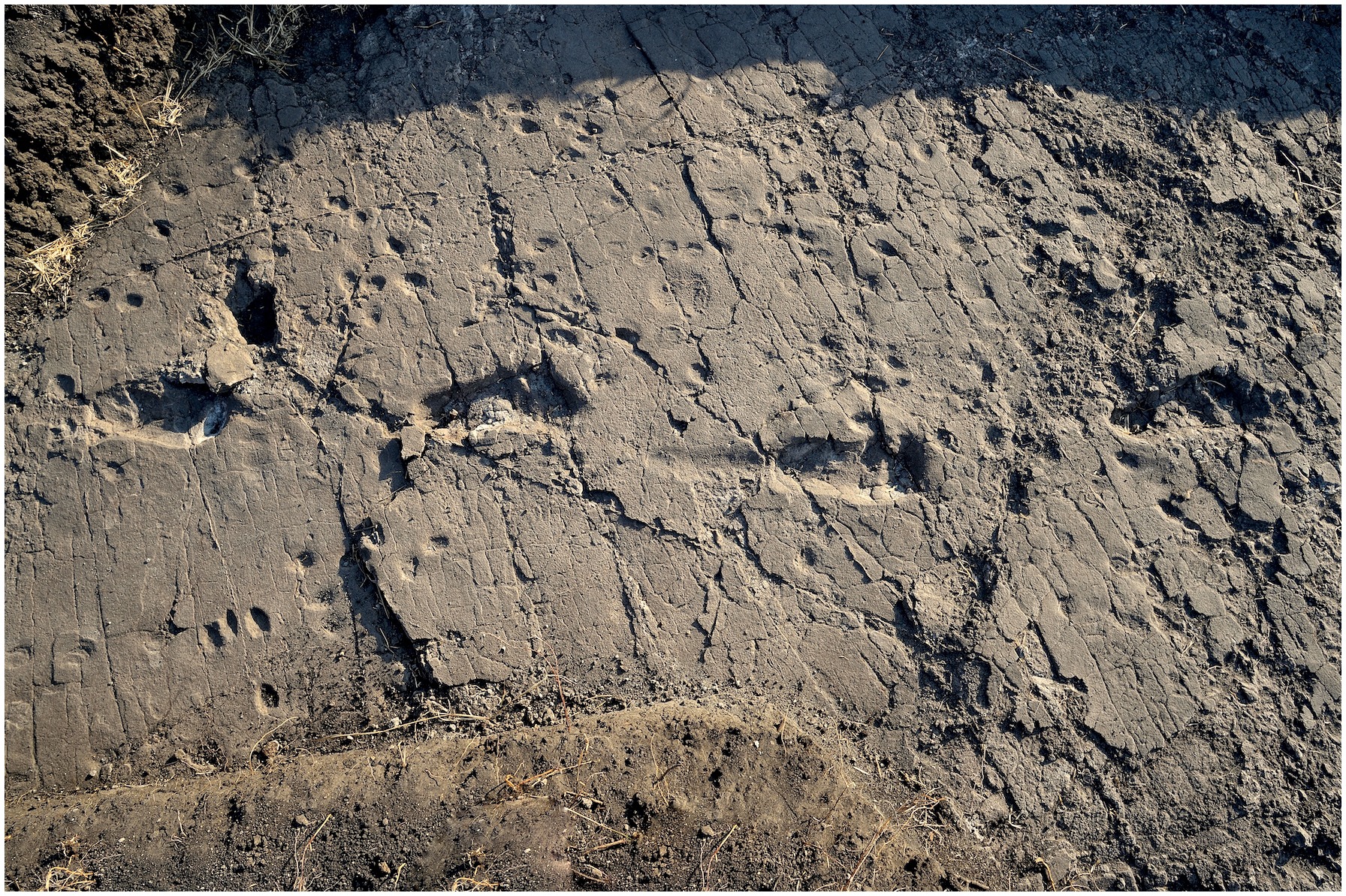
  • Site S is located only 150 m away from Site G. In October 2014 some excavation works were executed to assess the impact of building a museum including a protective covering for the Site G tracks. This yielded 14 hominin tracks plus other 529 tracks left by other animals including bovids, equids, girafs, rhinos…
Laetoli footprints

Figure 7 from Masao et al. 2016. Original caption: Southern part of the hominin trackway in test-pit L8. Footprints L8/S1-1, L8/S1-2, L8/S1-3 and L8/S1-4 are visible from left to right. The heel drag mark is well visible posteriorly to L8/S1-3.

Sigue leyendo