Artículo sobre este blog Nutcracker Man en El Correo de Burgos, 12 de julio de 2015. Muchas gracias a este diario y a Marta Casado.
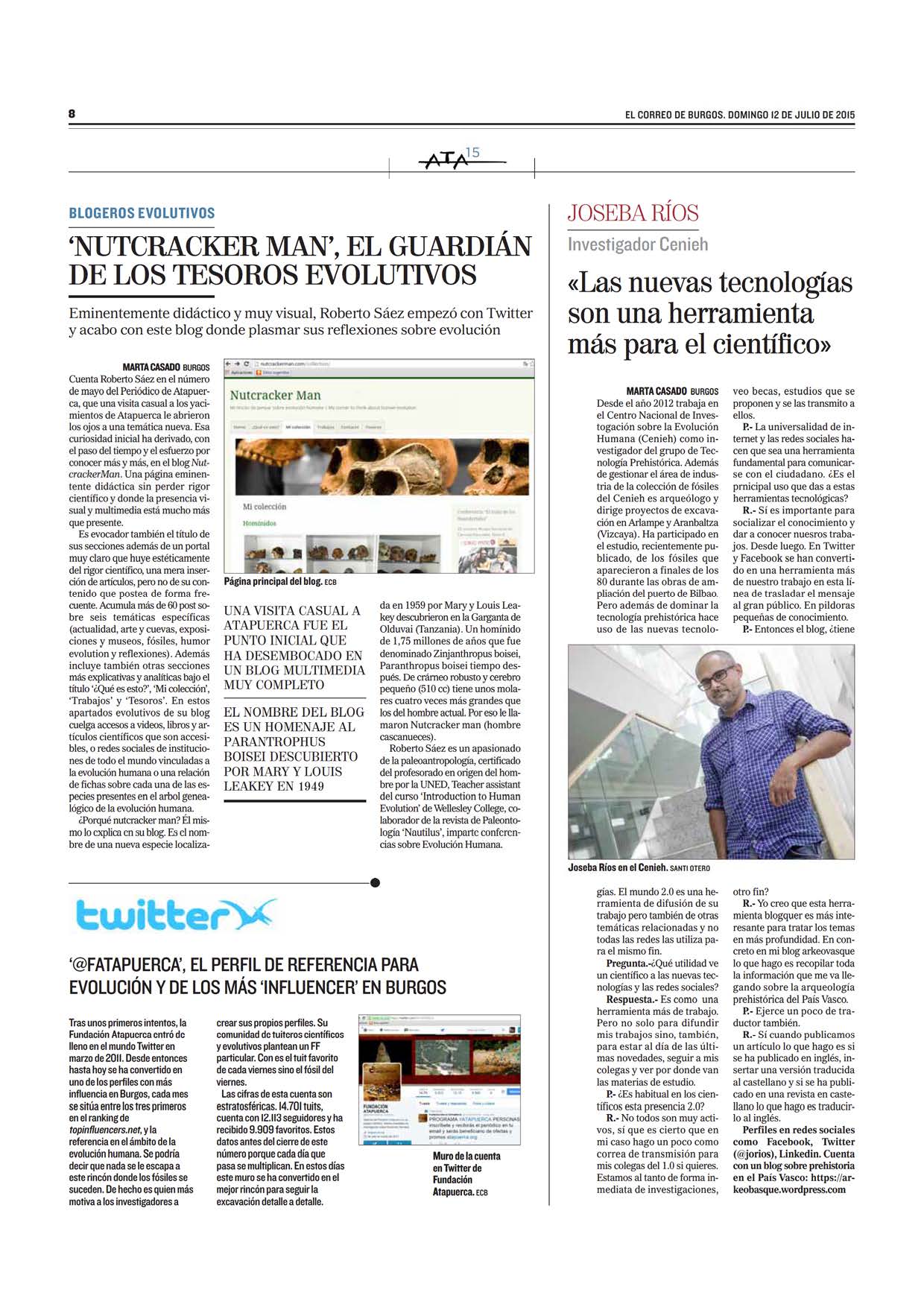

Artículo sobre este blog Nutcracker Man en El Correo de Burgos, 12 de julio de 2015. Muchas gracias a este diario y a Marta Casado.
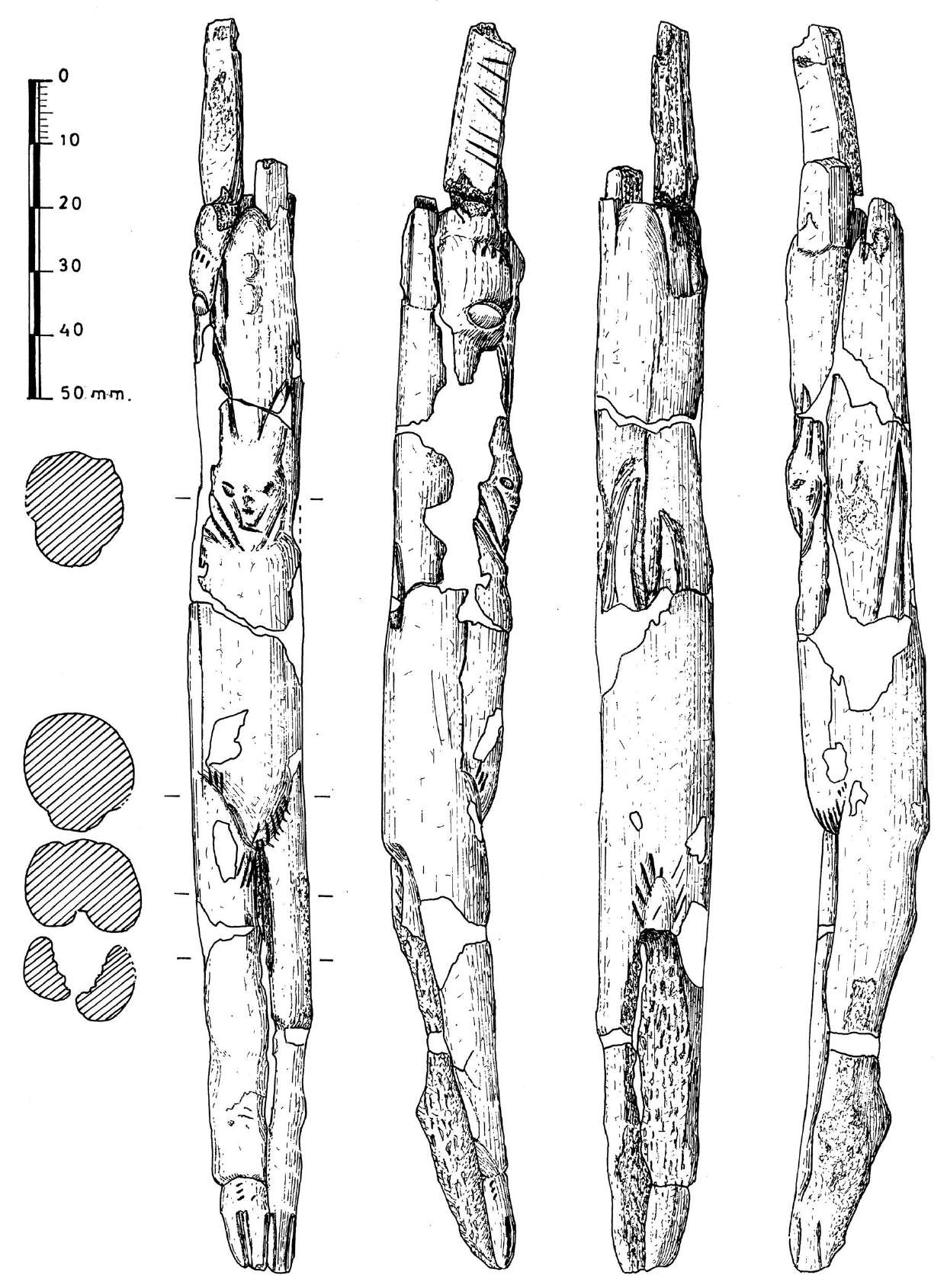
A great example of prehistoric art, and one of the oldest artworks, the Lion-Man was found in 1939 in the Stadel-Höhle im Hohlenstein Cave. It was carved out of mammoth ivory using a flint stone knife, dated to 30,000-35,000 years ago.
The lion is represented by the head, the long shapedbody and the arms formed like hind legs. The human part is represented by the legs and feet, as well as the upright position.
It is about 30 centimeters tall and weighs 250 g. Its creator polished it with saliva and leather. According to an experiment, it likely took about 320 hours to carve the figure.
The original was heavily damaged by the discoverer himself, the geologist Otto Völzing. When excavating, he actually stroke and broke the statue. In 1988 it was reconstructed from 220 fragments but 30% was still missing. In 2011 a new reconstruction was made by adding 1,000 found new fragments found in the cave after sifting through all of the rubble from 1939. The result was an almost complete Lion-Man! The original is in the Ulmer Museum, Ulm.

The Lion-Man in 1988 (L) and 2011 (R)

Dancing jaguar shaman (L). Stripes on Lion-Man (R)
Venus de Las Caldas

Sejmet
El Cráneo Negro es uno de los ejemplos más impresionantes de la diversidad en nuestro árbol evolutivo. Aunque no es un ancestro directo de Homo, sí es un tesoro de información sobre los cambios morfológicos y ecológicos que caracterizaron a la evolución de los homínidos hace 2,5 millones de años.
Su apodo (Black Skull) se debe al proceso de fosilización en sedimento con abundante mineral de manganeso, que le dotó de un color negro-azulado.
Fue descubierto por Alan C. Walker el 29 de agosto de 1985 al oeste del Lago Turkana, Kenia. Se codificó KNM-WT 17000 y se clasificó como Australopithecus aethiopicus.
Si es de Kenia, ¿por qué “aethiopicus” (de Etiopía)? Sigue leyendo
1) Preparación:
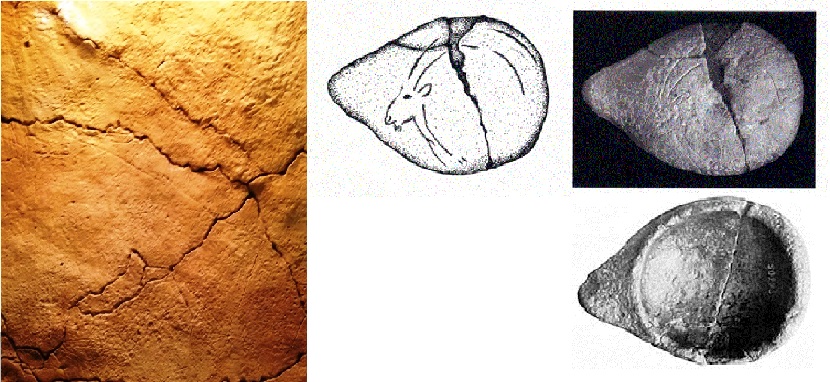
Pared de cueva Altamira (I). Lámpara de arenisca con ciervo grabado. Magdaleniense. Cueva de La Mouthe , Francia (D)
2) Grabado: Sigue leyendo
Os animo a leer mi reciente colaboración en Arqueoblog, titulada «Paleoantropología: la Ciencia que está de moda» [acceso].
 Nutcracker Man