¿Cruzamos o no cruzamos Gibraltar hace 1 millón de años?

Cueva Victoria (Murcia), en el sureste de España, es un importante yacimiento paleontológico del Pleistoceno Inferior e inicios del Pleistoceno Medio, con hallazgos de más de 90 especies de vertebrados. Hace 1 Ma. esta localización tenía un clima muy parecido a la costa norteafricana, que se halla 200 km al sur. El estudio de la cronología de Cueva Victoria [1] indica la presencia de fósiles del babuino gigante africano Theropithecus oswaldi leakeyi en niveles de 0,9 Ma. (MIS 22). Son los únicos restos de Theropithecus en Europa.

Por otra parte, en 2009 se documentó en Cueva Negra del Río Quípar (100 km al noroeste de Cueva Victoria) la evidencia más antigua de líticos achelenses en Europa, con una datación también correspondiente al MIS 22 [2, 3]. Esta industria es semejante a la encontrada en el norte de África y, a su vez, es ausente en el este de Europa.

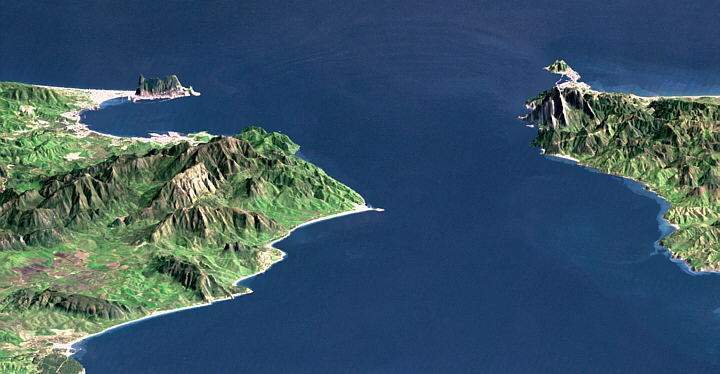
Estos dos estudios sugieren la teoría de una dispersión de homininos (y de Theropithecus) a través del Estrecho de Gibraltar hace al menos 0,9 Ma., cuando el nivel del mar estaba 100-120 m por debajo del actual, y el estrecho tendría una anchura de unos 5-7 km (frente a los 14 km actuales). En estas circunstancias, en algunas zonas del estrecho existirían numerosos islotes que podrían haber ayudado a cruzar desde África a la Península Ibérica a través de brazos de mar, bien a nado o bien con la ayuda de algún tipo de navegación primaria.


Dudas

  • Desconocemos aspectos de la paleogeografía del estrecho de Gibraltar en el Pleistoceno inferior: ¿se pudieron producir cambios importantes como un brazo más continuado de tierras emergidas?

Estrecho de Gibraltar. Foto: EcuRed

Sigue leyendo

The Top 10 hominin #FossilFriday tweets of 2015

Here’s my little annual tradition!! This is the second year I do this sort of special ‘summary annual report’: the list of my favorite #FossilFriday tweets in 2015, from number 10 to 1.

For those who don’t know what “FossilFriday” means… Every Friday on twitter, scientists and interested amateurs share pics of their favorite fossils, related scientific papers or blog posts, by using the hashtag #FossilFriday. This is a great manner to show famous or rare pieces of museum collections, and to share research works. I usually join this and tweet about a different hominid fossil every Friday. Now, let’s start!   Sigue leyendo

The Afar Triangle

Welcome Paige Madison to Nutcracker Man! This guest post addresses a key region for the understanding of human evolution, the Afar Triangle. It is the first time this area has a focused-review on the blog, and certainly it will not be the last one…

The Afar Depression (also known as the Afar Triangle) is one of the most important areas for the study of paleoanthropology worldwide. Located in East Africa, the Afar Triangle is a part of the Great Rift Valley. The area sits on top of a junction where three continental plates meet, called a triple rift junction. At this triple rift junction, a widening rift in the Earth’s crust is currently forming. The Awash River runs through the Afar region, and near the banks of the river many important hominin fossils have been discovered.

Excavations in the Afar Triangle began in the 1970s, and discoveries continue to accrue to the present day. The hominin fossil record at Afar stretches back millions of years, representing the most continuous record of hominin habitation anywhere in the world.

Key Fossils

1.     Ardi: Ardipithecus ramidus. Discovered at a site near the Awash River called Aramis, “Ardi” was recovered from sediments dating to 4.4 million years old. The team who discovered Ardi in 1992 was led by Tim White and Gen Suwa at Berkeley. The skeleton’s name is derived from the local Afar language; “ardi” means “ground” and “ramid” means “root.” Ardi’s skeleton tells us that Ardipithecus had the ability to walk bipedally—on two legs—but probably spent a lot of time in the trees.

2.     Lucy: Australopithecus afarensis. The truly iconic skeleton of Lucy was uncovered in 1974 at the site called Hadar, close to the Awash River. Discovered by Donald Johanson of the Institute of Human Origins, Lucy dates back to 3.2 million years old. Lucy’s relative completeness tells us that some hominins were fully, habitually bipedal by 3 million years ago.
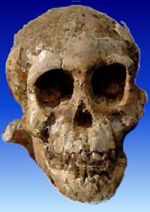
DIK-1/1, Selam. Photo: Wikipedia

3.     Selam: Dikika baby: Australopithecus afarensis. Just across the river from Hadar, the most complete skeleton of an early hominin turned up at the site of Dikika in 2003. Discovered by Zeresenay Alemseged, of the California Academy of Sciences, the Dikika individual was very young, possibly about three years old. Nicknamed Selam, this individual tells scientists that Australopithecines grew up quickly, like chimpanzees and gorillas and unlike humans (who have an extended growth period).

4.     First Family: Australopithecus afarensis: One year after Lucy was found, a team at the Institute of Human Origins discovered another amazing find, a collection of at least 17 A. afarensis individuals at a single site! The individuals are a mixture of young and old, and therefore provide information about variation within an Australopithecine population.

These discoveries are just a few of the rich hominin finds that have been uncovered in the Afar Triangle. Though these highlights have featured A. afarensis, many other taxa are represented in the area!

Afar Environment and Dating the Fossils

By examining fossils of other creatures that lived in the region—such as pigs—scientists are able to reconstruct the environment of the Afar when hominins roamed the area. Scientists use methods such as examining fossilized teeth to determine the kinds of plants local creatures ate. Scientists have learned that areas such as Hadar has not always been a dry desert, but instead was a wet, wooded environment during the time hominins were evolving.

One of the most remarkable features of the Afar region is the fact that fossils can be dated accurately and precisely. The presence of numerous volcanoes in the Afar region has resulted in some of the most accurate dates for hominin fossils anywhere in the world. The dating method used in the Afar region is called potassium argon dating, which takes advantage of the unique chemical signature of each volcanic eruption, and calibrates those eruptions on a time scale.

The Afar Today

Excavations are ongoing in the Afar Triangle through to the present day; with recent finds such as the Ledi-Geruaru jaw having been uncovered within the last few years! Continuing excavations by teams at Berkeley, the Institute of Human Origins, and other organizations, will hopefully continue to add to scientists’ knowledge about human evolution for decades to come.

About the Author

Paige Madison is a PhD candidate studying the history of paleoanthropology at Arizona State University. She blogs at fossilhistory.wordpress.com and tweets about the history of science @FossilHistory!

A few quick reflections by John Hawks

Reading John Hawks’ reflections on social media is usually a pleasure. I wanted to collect here just 20 of my favorite ones. Enjoy!   —   Thanks, Professor

Serious

  • 1- When I think of the students who are entering paleoanthropology, they are going to be my scientific peers five, ten years from now. Why in the world would I not want them to have the best, most current data from our fieldwork? I’m struggling to understand the mindset of scientists who think that students shouldn’t see the fossils.
  • 2- Four years ago we did an event at the AAPA meetings where we brought casts of fossils for the membership. What stunned me is that these practicing and teaching biological anthropologists were not only crowding around the new discoveries. They were also straining to see famous fossils that have been out of the ground for 40 years, that they’ve never been able to examine because casts cannot be bought. We must change this culture.
  • 3- Tired of seeing question «Which hominin was the stone tool maker?» In absence of further evidence, the correct answer is «Any and all».
  • 4- Paleoanthropologists have an unfortunate tendency to smuggle in assumptions and then act as if the resulting conclusions were real.
  • 5- I’m a scientist. I don’t want to people to accept that what I say is accurate. I want to give them the tools to find out for themselves.

Sigue leyendo

El yacimiento Rua dos Correeiros

Aunque mi foco es el Paleolítico, recientemente tuve ocasión de visitar en Lisboa un tesoro arqueológico poco conocido, que explica la actividad desarrollada allí durante 2700 años en los distintos periodos que ha vivido. Me impresionó y me empujó a compartir estas líneas sobre él.

El Núcleo Arqueológico da Rua dos Correeiros, es un yacimiento que apareció en 1991 en el subsuelo de una sede del banco portugués Millenium bcp, cuando iban a construir un aparcamiento bajo el edificio. Se decidió proteger el sitio y continuar la excavación, que duró 4 años. Ahora mismo es visitable en los varios niveles de que se compone.

El yacimiento está localizado en una ubicación privilegiada a la orilla del estuario del Tajo, ocupada ininterrumpidamente en distintos periodos de tiempo:

  • Edad del Hierro / Periodo Ibero-Púnico. Los restos más antiguos son una división estructural de viviendas construidas hace 2700 años por mercaderes cartagineses, que comerciaban con metales preciosos.

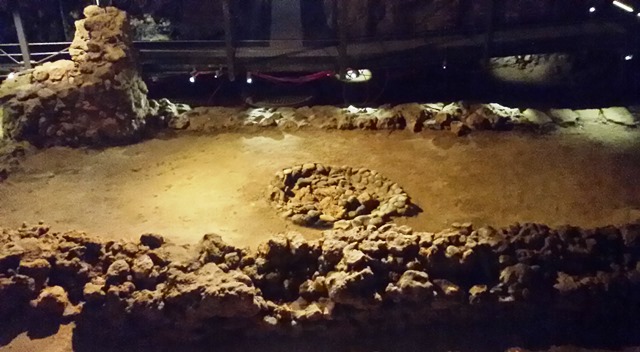
Vivienda ibero-púnica, Rua dos Correeiros. Foto: Roberto Sáez

Sigue leyendo