5 key facts about the nuclear DNA from Sima de los Huesos

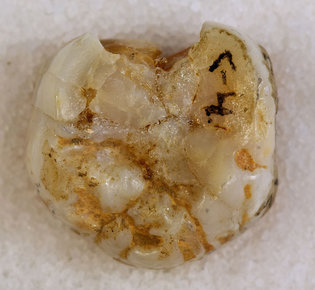
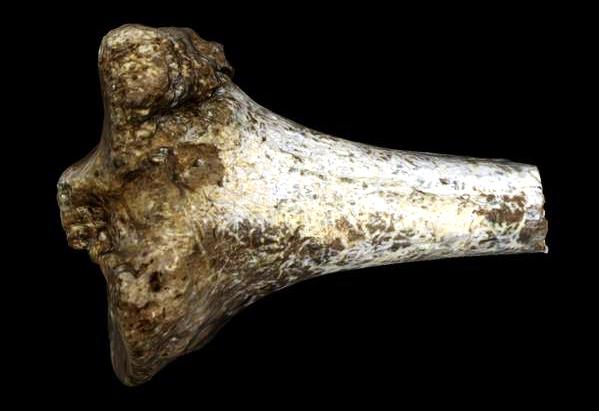
Last week the spread of information around Homo naledi was huge. But there was another hugely important publication in the human evolution field: the results of the partial sequencing of nuclear DNA from the Sima de los Huesos site in Atapuerca, Spain. The samples were taken from two fossils, a femur and a tooth. This project is carried out by the Max Planck Institute for Evolutionary Anthropology.

The Homo naledi’s announcement was just the day before Sima’s, so the spread of the Sima news is actually happening mostly in the current week. Unfortunately I have read a few interpretations which were exagerated or inaccurate, so I wanted to summarise below a list of key facts from the Sima DNA findings:

1) The analysis is still partial. They are only some initial results. The human nuclear DNA is c. 3 billion base pairs (nucleotides) and they are reconstructing small fragments of c. 20-30 pairs each. They have been able to sequence 1 to 2 million pair bases so far (0.1%). The amount of work is huge…! The overall target is to reach an assemblage fraction of c. 0.5% to 1% of total nuclear DNA. That will be meaningful to determine the evolutionary relationships.

2) The initial results show that Sima fossils share a close affinity with Neandertals (as their morphology had already indicated), and suggests two scenarios:

  • A) They are early Neandertals or related to early Neandertals: They gave rise to the ‘classic Neandertals’. A formal classification would then be required for them – maybe even a new species.
  • B) They are in fact the earliest known Neandertals. This option is widely discarded by scientists, who are aligned more around the first option ‘A’: the partial sequence of the nuclear DNA is consistent with the Sima group being pre-Neandertals.

3) The full analysis, when finished, will not be enough to fully characterize the population form. For this, they would need a much higher fraction of at least 10%, which is almost impossible considering that this is the oldest human DNA recovered (430K years).

4) The results differ from the mtDNA analysis made in 2013, which showed a strong relation of the Sima hominids with the Denisovans, and no so much with the Neandertals. The researcher Matthias Meyer thinks this is due to some introgression of other mtDNA lineages. That suggested two scenarios:

  • Eventual interbreeding between the Denisovans and the Sima populations.
  • A common ancestor of Neandertals, Denisovans and the Sima populations.

5) If confirmed, the results will push back the H. sapiens-H. neanderthalensis ancestor beyond 400 KYA. Meyer suggested that the ancestors of H. sapiens could have diverged from the branch leading to Neandertals and denisovans 550 k to 765 k years ago. It may be possible that H. sapiens evolved in western Eurasia and later migrated back into Africa. The fossils from Europe, Asia and Africa in the 400 Ka. period are physically very diverse and may represent multiple species, only one of which could be the ancestor of today’s humans. For example, Chris Stringer thinks it may be needed to look at Homo antecessor and not Homo heidelbergensis as our last common ancestor with Neandertals.

(L) Skull 5 of Sima de los Huesos. (R) Gibraltar 1 Neandertal skull from Forbes’ Quarry. Photo: Roberto Sáez

Do you want to know more about Sima de los Huesos? 

Check out this post to know everything about this amazing site! All info + slideshow here.

Quick summary about Homo naledi

A major announcement was made on Sep 10th 2015: the publication of Homo naledi, a new species of the genus Homo discovered in the Dinaledi Chamber of the Rising Star cave system, South Africa.

Naledi is an African name that originates from the Sesotho tribe in southern Africa, meaning ‘star’.

Homo naledi. Photo: Lee R. Berger

Reconstruction of Homo naledi. Credit: Lee R. Berger

About the hominid

  • 1,800 fossil specimens representing at least 15 individuals, spanning the full range of ages from infancy to old age.
  • This is the most complete assemblage of fossils from a candidate human ancestor ever found. All body parts are represented, making the Homo naledi sample richer than that of any other early human species such as Homo rudolfensis, Homo habilis, and Homo erectus.
  • Average height 1.5 m, weight 45 kg.
  • Skull: Primitive, resembling Homo habilis. Size between 466 and 560 cc, compared to H. habilis (510-700 cc), H. erectus (550-1100 cc), and H. floresiensis (426 cc).
  • Dentition: Teeth from individuals of different ages. Primitive traits include increasing size towards the back of the jaw, but they are small and simplified, set in lightly built jaws—features considered more modern.
  • Postcranial skeleton: Wrists, hands, legs, and feet are similar to those of Neanderthals and modern humans. The curved finger bones suggest climbing ability, while the legs and feet indicate long-distance walking efficiency. The overall body shows similarities to the Homo erectus fossils from Dmanisi.

About the site

  • Only hominins seem to have reached the Dinaledi Chamber. Fossil preservation is exceptional: the bones show no cut marks, no breakage, and no evidence of animal activity.
  • There is no archaeological evidence of habitation—no tools, no fire traces. The chamber was never open to the surface, and the route to it is extremely difficult. Other animals could not have accessed it.
  • The fossils were not transported by water, nor do they show signs of a catastrophic event or scavenging.
  • Conclusion: The leading hypothesis is deliberate deposition of bodies, possibly involving some form of burial or ritual, though catastrophic explanations cannot be ruled out. This scenario recalls that of the Sima de los Huesos site (Atapuerca, Spain, 430 ka). However, while the Sima hominins had brain capacities of around 1000 cc, Homo naledi was a small-brained hominin—an unexpected candidate for complex behaviors
  • Open questions: Further research must address unresolved issues: How did the hominins reach the chamber? Did the cave have another entrance in the past? How did they use fire? For now, Homo naledi is known only from the Rising Star cave system, at two locations: the Dinaledi Chamber (published in 2015) and the Lesedi Chamber (published in 2017). Was this species restricted to southern Africa?

Dating

  • Dating studies published in 2017 and 2021 place the age of H. naledi fossils between 241 and 335 ka—much more recent than early speculations, which suggested around 2 Ma, near the origin of the genus Homo.

Los vascos y Atapuerca, desde 5 puntos de vista

Ayer se difundió el estudio publicado en PNAS del ADN mitocondrial de 8 individuos encontrados en El Portalón, uno de los yacimientos de Atapuerca. Estos restos tienen una antigüedad entre 5.500 y 3.500 años.

Como escribí hace unas semanas, El Portalón es la entrada de Cueva Mayor y ha tenido ocupación humana de forma continuada como mínimo a lo largo de los últimos 11.000 años, y su base tiene 30.000 años de antigüedad.

A buen seguro dará más mucho que hablar en los años sucesivos, ya que por ahora se están excavando los niveles superiores: restos de la Edad del Bronce que muestran uso habitacional y estabulación de ganado, del Calcolítico que indican uso funerario, del Neolítico (estudio objeto de este post), e incluso restos medievales como una moneda de oro almohade del siglo XIII.

El pasado mes de julio Juan Luis Arsuaga anticipaba algunas líneas principales de la investigación actual del yacimiento: el estudio de los pobladores de la zona hace 7.000 años, que trajeron la agricultura que se había inventado hace 12.000 años en el Mediterráneo Oriental y Mesopotamia.

Pues bien, lo que ocurrió fue que aquellas poblaciones de origen oriental se mezclaron con los vascos y con otras poblaciones del norte peninsular, dando lugar a raíces comunes para todas ellas. Y esto quedó reflejado en el ADN mitocondrial, que presenta fragmentos o haplogrupos similares entre los individuos de El Portalón estudiados y los vascos actuales.

Un punto que me ha resultado muy curioso de la difusión de este estudio, ha sido la diferencia entre los matices con que cada medio lo ha destacado. Esto suele suceder mucho en la difusión de las noticias científicas (y no científicas), pero anoche me animé a tomar nota de estos diferentes matices. Por ejemplo:

1) Foco en la relación entre los vascos y los primeros agricultores de la zona de Atapuerca: Museo de la Evolución Humana, CENIEH, José María Bermúdez de Castro, Eudald Carbonell, Fundación Atapuerca, Agencia SINC, El Correo de Burgos, María Martinón-Torres, Dominique Irigaray, Imagine, Diario de Burgos, Noticiasburgos, El Mundo…

2) Foco en que el estudio destierra viejas creencias sobre la antigüedad o aislamiento de los vascos: El País, BurgosConecta, Sombradoble, La Nueva Ilustración, Jorge Alcalde (Director de QUO), Enrique Coperías (Director de Muy Interesante), La Vanguardia, ABC, Paleofreak, Cort Sims… BBC News titula “DNA cracks puzzle of Basque origins”.

3) Una variación del anterior con un toque de humor: “Descubren el eslabón vasco en Atapuerca” (Antonio Martínez Ron, colaborador en varios medios científicos).

4) Foco en los orígenes de la lengua vasca en el marco de este estudio: “Unusual ‘relic language’ comes from small group of farmers isolated for thousands of years” (Michael Balter, escritor científico estadounidense).

5) Y por último, destaco el foco que dio EFE y otros medios que lo replicaron: “Los vascos, los habitantes con más genes neolíticos de la Península”.

Agricultor vasco, «baserritarra». Foto: EFE

Novedades en Pinilla del Valle, el Valle de los Neandertales

El “Valle de los neandertales” es la denominación que se da a un conjunto de yacimientos situados en Pinilla del Valle, 90 km al norte de Madrid, y que se está convirtiendo en uno de los sitios paleontológicos más importantes del centro de la Península Ibérica. Abarca un rango temporal desde finales del Pleistoceno medio, hace 200 ka (miles de años), hasta el Pleistoceno superior hace 40 ka. He tenido la oportunidad de visitarlo y resumo aquí en qué consiste este lugar y las novedades de la campaña 2015.

El proyecto tiene tres codirectores: Juan Luis Arsuaga (Paleontología), Enrique Baquedano (Arqueología) y Alfredo Pérez González (Geología).

A finales de los años 70 comenzaron las primeras excavaciones, pero sufrieron un parón hasta que se retomaron de forma sistemática y continuada en 2002. Los trabajos se centran en el Calvero de la Higuera, con cuatro yacimientos, y varias prospecciones en otros calveros de la zona.  Sigue leyendo

ER 1470: un cráneo controvertido

El pasado 27 de agosto fue el cumpleaños del hallazgo del cráneo KNM ER 1470 en 1972 por Bernard Ngeneo, un miembro del equipo de Richard Leakey, en Koobi Fora (orilla oriental del Lago Turkana, antes lago Rodolfo).

Richard era hijo de Louis Leakey, quien falleció de un ataque al corazón solo cuatro días después de que Richard le enseñara el fósil. Fue encontrado en un nivel cuya datación estimaban en 2,61 Ma, lo cual hizo muy feliz a Louis porque para él significaba que era, no solo el cráneo mejor conservado de Homo habilis, sino el más antiguo Homo, lo cual daba plenitud a sus expectativas.

Tras descubrirse aquel día los primeros fragmentos, Richard y Bernard Wood se unieron a los trabajos de excavación y en los siguientes días encontraron 150 nuevas piezas, que lograron reconstruir con la ayuda de Meave Leakey (esposa de Richard) y Alan Walker.

ER 1470: sus 150 fragmentos y la reconstrucción original. Foto: Science Photo Library

Las primeras discusiones

Todos estaban de acuerdo en que ER 1470 tenía una gran capacidad craneal (750 cc frente a los 500 cc de promedio en Homo habilis), pero Alan discrepaba en que eso le hacía ser Homo. Opinaba que su morfología era más afín a los australopitecinos gráciles de parecida antigüedad que se habían estado descubriendo por la misma región. Pero Richard escribió sobre el cráneo en National Geographic como el Homo más antiguo, “The Oldest Man”.  Sigue leyendo