Paleoantropología: novedades 1er trimestre 2019

Si terminamos el último trimestre de 2018 destacando 20 noticias, en el primer trimestre de 2019 he recopilado otras 20. Espero no haber olvidado ninguna. En todo caso y como siempre, estaré encantado de recibir vuestras sugerencias.

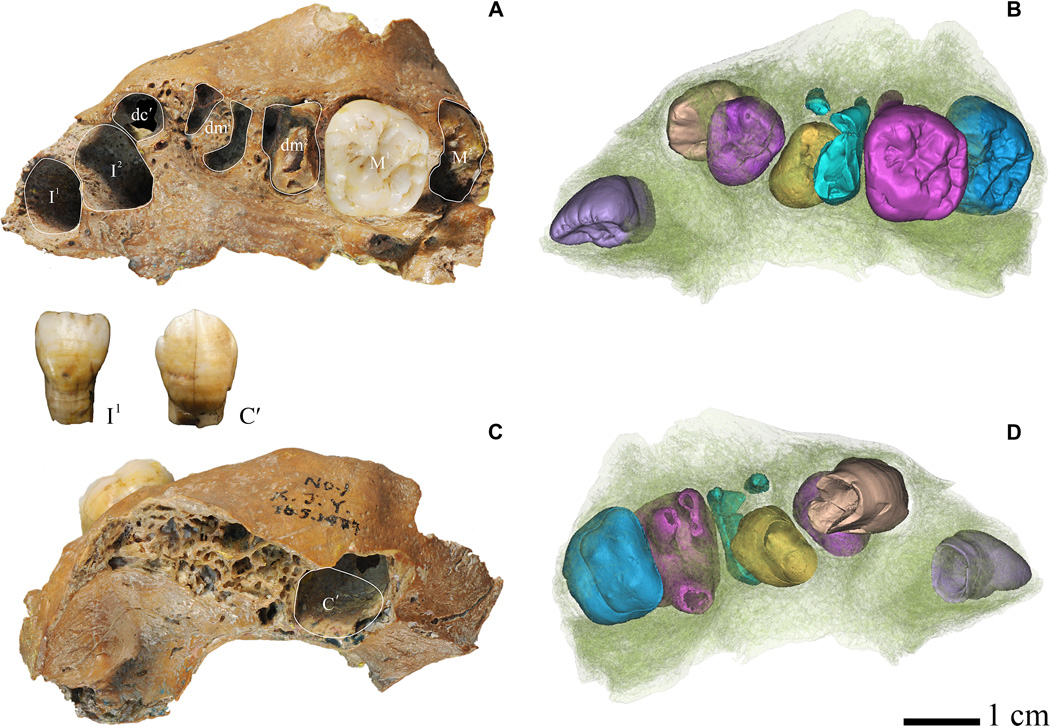
  • El año comenzó con la publicación de un fragmento mandibular de Xujiayao, de un niño de 6 años y medio en principio asignado a Homo erectus, que conserva 7 dientes de diferentes etapas de su desarrollo. Su análisis indica sorprendentemente un patrón de crecimiento más lento del esperado para un hominino del Pleistoceno Medio (vivió hace entre 104-248 ka) [+info].
Xujiayao

Original Xujiayao fossil (A and C) and μCT reconstruction of all the teeth (B and D). Crédito: Song Xing, Institute of Vertebrate Paleontology and Paleoanthropology, Chinese Academy of Sciences.

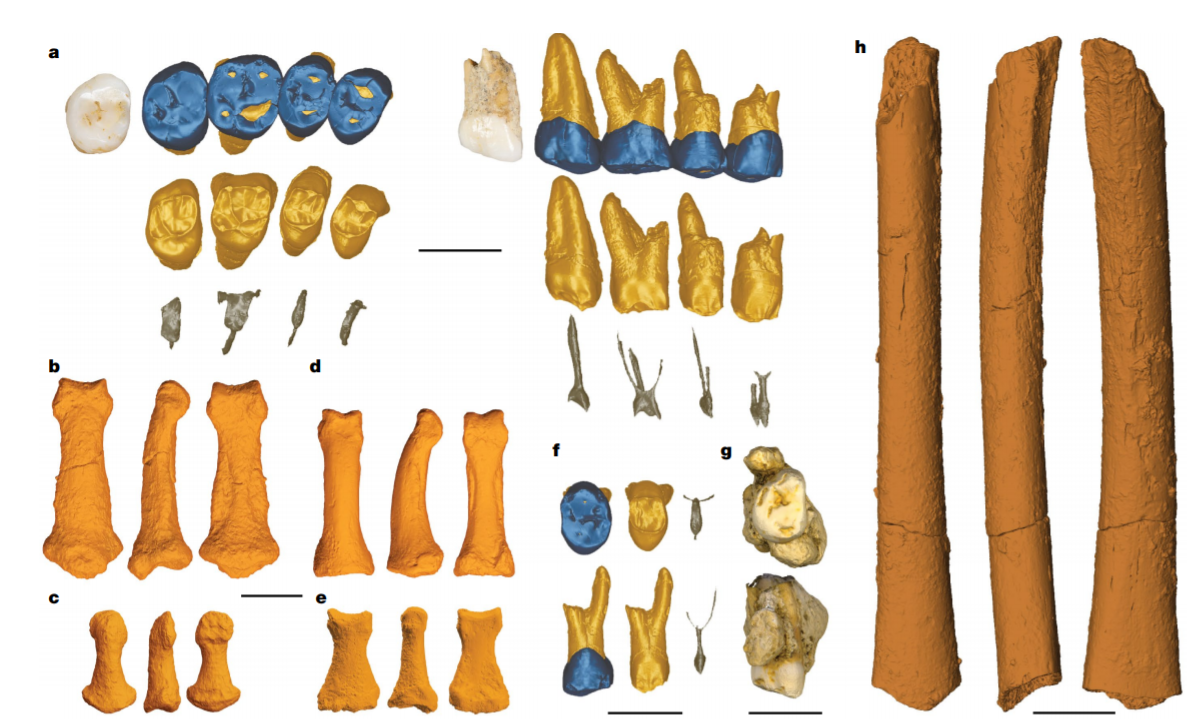
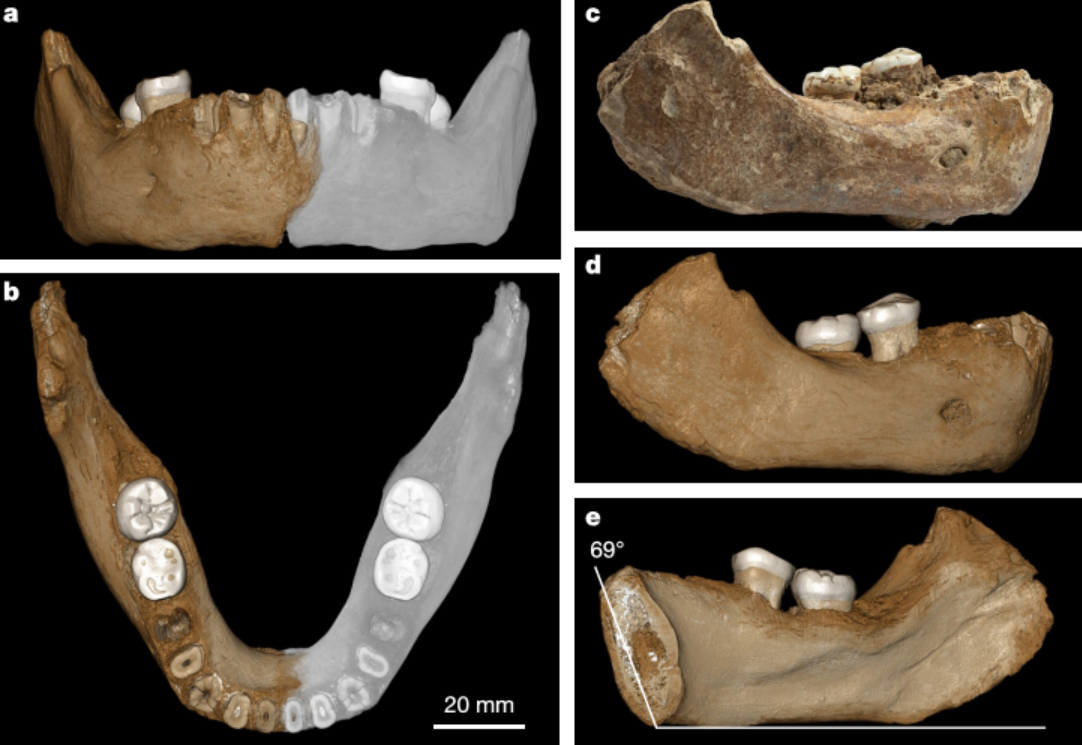
  • La cueva Denisova y los humanos que la habitaron han dado mucho que hablar. Para empezar, se ha logrado concretar el tiempo de ocupación de los distintos grupos humanos en la cueva, a partir de distintos estudios de los huesos de fauna, restos de plantas, restos líticos, carbón y otros sedimentos [+info]:
    • En general, denisovanos y neandertales estuvieron allí de forma intermitente entre hace 200-50 miles de años (ka). Además, restos líticos en las capas más profundas sugieren presencia humana hace 300 ka.
    • El rango temporal más probable de los denisovanos en la cueva comienza hace 195 ka hasta 52-76 ka.
    • Los neandertales tienen presencia más probable hace entre 80-140 ka.
    • El encuentro e hibridación entre denisovanos y neandertales fue hace unos 120 ka.
    • Los humanos modernos dejaron en ese lugar las puntas de hueso y colgantes más antiguos del norte de Eurasia hace 43-49 ka.

Sigue leyendo

Paleoantropología: novedades 2º trimestre 2018

Comenzamos julio repasando una selección de novedades del segundo trimestre del año, con enlaces a los estudios en que se basan. Echando un vistazo a estas series trimestrales de recopilaciones de noticias, realmente ningún trimestre decepciona…

El poblamiento de América

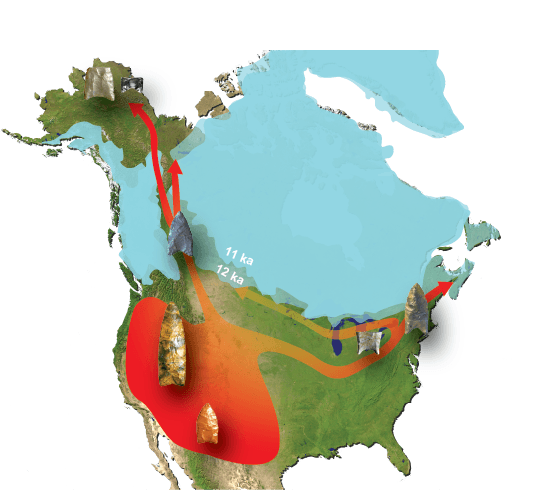
  • Se refuerza la hipótesis del primer poblamiento de América del Norte a través de una ruta costera del Pacífico, frente a la alternativa por una ruta interior del oeste de Canadá. Así lo indica un conjunto de puntas de arpón estriadas procedentes de Alaska y Canadá, que guarda relación con la tecnología Clovis que venía utilizándose en la zona media de América del Norte. Los fabricantes de esas herramientas hace 12.000 años no estaban migrando hacia el sur, sino que procedían de pueblos ancestrales del sur y se movían hacia el norte [+info]. La hipótesis del poblamiento por la ruta costera toma cada vez más fuerza de acuerdo a los análisis genéticos y al hallazgo de yacimientos en Canadá anteriores a la creación del corredor interior libre de hielo. Los patrones migratorios hace 12-14 ka eran por tanto más complejos que un simple movimiento constante hacia el sur.
America

Credit: Smith H.L. and Goebel T. (2018) Origins and spread of fluted-point technology in the Canadian Ice-Free Corridor and eastern Beringia.

Sigue leyendo

The importance of Ardi (Ardipithecus ramidus)

The importance of Ardi (Ardipithecus ramidus)

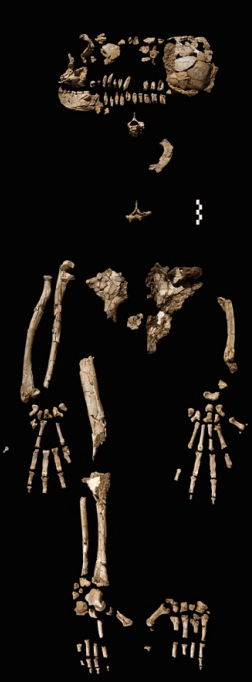
On December 17, 1992, Gen Suwa discovered the first molar of a new hominin species in Aramis, Ethiopia. Between 1992 and 1994, additional teeth and bone fragments were recovered, amounting to about 45% of a skeleton (ARA-VP-6/500) later nicknamed Ardi. White, Suwa and Asfaw defined for it the species, Ardipithecus ramidus. Interestingly, this percentage of preserved skeleton is comparable to that of Lucy (Australopithecus afarensis), discovered just 74 km north of Ardi’s site.

Ardi was a female, approximately 120 cm tall and weighing around 50 kg, dated to 4.4 Ma (million years). It is the most complete early hominin known to date, with key skeletal elements preserved, including parts of the skull, teeth, pelvis, hands, arms, legs, and feet. This remarkable discovery has greatly expanded our understanding of early human ancestors, particularly in terms of locomotion. The name “Ardi” means “ground floor” and “ramid” means “root” in the Afar language, suggesting that she lived on the ground and symbolized a root of the human family tree.

In just a 9 km area of the Middle Awash Valley, fossils of 35 individuals of Ar. ramidus have been discovered, along with more than 6,000 remains of diverse animal species. The region is also remarkable for other paleoanthropological sites, such as Bodo (Homo rhodesiensis, c. 600 ka—thousand years), Herto (Homo sapiens, c. 170 ka), Bouri-Hata (Australopithecus garhi, 2.5 Ma), and Daka (Homo erectus, 1 Ma).

An even older species of Ardipithecus was also found there: Ar. kadabba, dated between 5.2 and 5.8 Ma, and considered a likely ancestor of Ar. ramidus. Evidence is fragmentary, limited to a few teeth—chimpanzee-like in size, shape, and canine-premolar occlusion—and some postcranial elements that already suggest bipedal locomotion.

Ardi’s pelvis provides crucial insights. The ilium shows clear adaptations for bipedalism, while the ischium, pubis, and grasping big toe indicate strong climbing abilities but poor running efficiency. This challenges the long-standing “savanna hypothesis,” which held that bipedalism evolved in open grasslands. On the contrary, Ardi’s anatomy shows that early hominins started to develop bipedalism within forested environments around 5 million years ago. Only later, about 1 million years afterward, bipedal locomotion likely become more dominant, with climbing adaptations disappearing from hominid morphology.

Most of Ardi’s remains were extremely fragile and highly fragmented—the cranium alone was found in 64 pieces. Instead of a physical reconstruction, researchers used digital microtomography, compiling more than 5,000 images to virtually reconstruct her skull.

ardipithecus-ramidus
Reconstruction of Ardipithecus ramidus skull. Credit: Roberto Sáez